
Custom Rubber Grommets For 20 Years
- #1 OEM/ODM Avaliable
- #2 Quick response in 24hours
- #3 Support 3rd Party Audit
- #4 Process Report Throughout
- #5 Low MOQ accept
Custom Rubber Grommets Manufacturer | Industrial & Wire Protection
Engineering Superior Cable Protection
At RiseUp Rubber, we understand that rubber+grommets are the first line of defense for your electrical systems. Unlike brittle wire grommets plastic alternatives, our flexible elastomer solutions provide superior damping for sheet metal grommets applications, shielding cables from sharp edges and vibration.
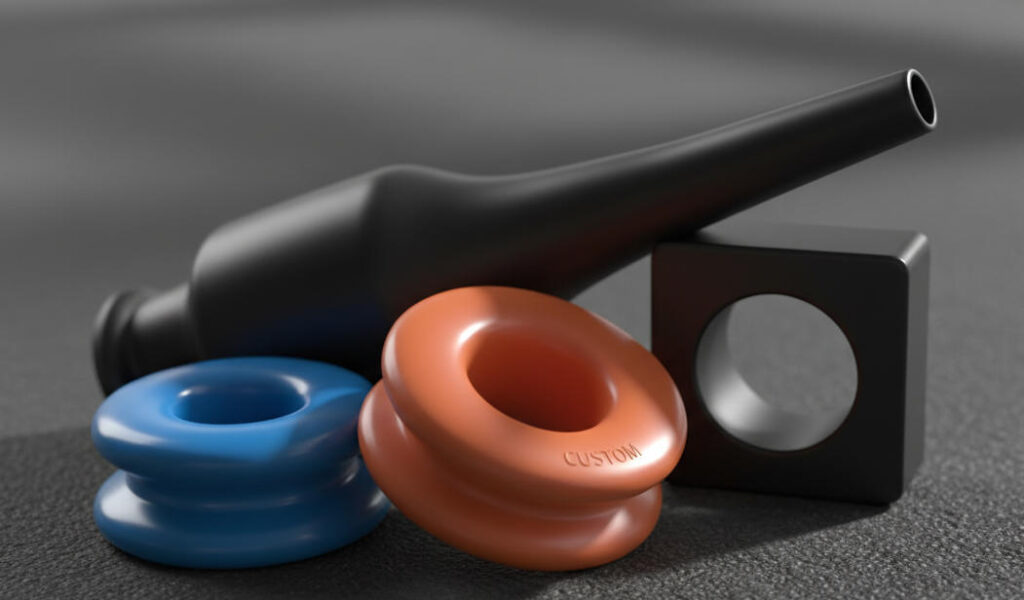
Beyond Standard Round Shapes While standard circular parts fit most drilled holes, complex assemblies often require specialized geometries. We specialize in manufacturing a wide variety of shapes to fit your specific connector needs:
Rectangular & Square: We mold precision rectangular rubber grommets and square grommet profiles. These are essential for flat ribbon cables or specialized multi-pin connectors where a round hole isn’t feasible.
Oval & Oblong: Our inventory includes oval rubber grommets (also known as oblong) designed for elongated pass-throughs. Whether for automotive or aerospace, we ensure a flush, professional fit.

Vibration, thermal expansion, and sharp sheet metal edges are the silent enemies of your electrical systems. Without proper protection, a simple drilled hole can act like a knife, slicing through wire insulation and causing short circuits, equipment downtime, or fire hazards.
The Rubber Garment (also known as a Wire Guard) is your first line of defense.
While they may look like simple rubber rings, selecting the correct rubber gromet is a precise engineering decision. It acts as a bumper, a seal, and an insulator all in one.
To ensure your system is protected, you need more than just “a piece of rubber.” You need to match the Groove Width to your panel thickness, select the correct Inner Diameter (ID) for your cable size, and choose a Material that won’t degrade over time.
In this guide, we move beyond the basic catalog to help you engineer the perfect fit:
• Protection: Preventing abrasion and cuts on sensitive wiring.
• Sealing: Blocking dust and moisture from entering your enclosure.
• Vibration Isolation: Dampening noise and protecting hardware from shaking loose.
Comprehensive Sizing: From Miniature to Extra Large
Finding the exact grommet sizing is critical for vibration control and NEMA compliance. We maintain an extensive inventory ranging from precision eyelet sizes for electronics to large rubber grommets (often searched as big rubber grommets) for heavy industrial piping.
Standard & Custom Dimensions We stock both standard grommet sizes (MS/AN spec) and fully metric rubber grommets. Whether your application requires a fit for thin sheet metal or a robust rubber grommet 1/4 panel thickness, we have the mold ready.
Grommet Size Chart & Resources Don’t guess the fit. Reference our detailed grommet size chart (or grommet sizing chart) below. This grommet hole size chart lists all critical rubber grommet dimensions—including Groove Width (GW) and Groove Diameter (GD)—making it easy to filter rubber grommets by size.

The Anatomy of a Rubber Grommmits: How to Measure for the Perfect Fit
Selecting a type of grommets based on a guess is a recipe for failure. To ensure a secure fit that won’t pop out under vibration or pinch your wiring, you must match the grommet’s dimensions to your panel’s specific geometry.
The 5 Critical Dimensions
Use this guide to match your physical application to our part specifications.
Measurement Matching Table

Pro Tip: Sizing for “Panel Thickness” The most common mistake is ignoring the Groove Width.
• Example: If you are installing into a standard 14-gauge steel sheet (approx. 0.075″ thick), do not buy a rubber grommer designed for 1/4″ (0.250″) thick plastic panels. It will slide around and fail to protect the wire.
Visual Selector: Which Rubber Gromets Profile Do You Need?
While the standard “donut” shape is the most common, specific applications often require specialized profiles. Use this guide to identify the exact type for your project.

1. Standard Round Rubber Grommit (S-Type / AN931 )
• Description: The classic open ring.
• Best For: General-purpose wire and cable pass-through.
• Key Standard: We stock a massive inventory of AN931 grommets for aerospace compliance.
2. Blind & Webbed Grommets (Blanking Plugs)
• Description: Features a solid rubber center (Blind) or a thin rubber membrane (Webbed).
• Best For:
• Sealing: Plugging unused holes in a panel to prevent dust/water ingress.
• Future-Proofing: You can slice the “web” later to pass a wire through if needed.
3. Split / Horseshoe Grommets (Open Type)
• Description: These grommets have a slit cut through the ring.
• Best For: Retrofitting. If your cable is already installed (or has a large connector plug attached), you can’t thread it through a standard grommet. A split grommet can be wrapped around the cable and then inserted into the hole.
4. Extended Neck & Vibration Mount Grommets
• Description: Features a longer body or thicker flanges.
• Best For: Vibration Isolation. These act as a bushing or spacer, suspending a component (like a fan or motor) away from the panel frame to dampen noise and shock.Rub
Material Selection for Critical Environments
The performance of wiring grommets rubber relies entirely on the material compound. We manufacture parts using commercial and military-grade elastomers to meet specific industry challenges:
• Marine Grade (EPDM): Known for exceptional resistance to UV, ozone, and salt water. EPDM is the industry standard for marine grommets (often searched as a boat grommet). We supply specialized marine waterproof wire grommet solutions to protect electrical systems on vessels from moisture ingress.
• Automotive Grade (Nitrile & High-Temp): For engine compartments involving oils and high heat, standard rubber isn’t enough. Our heat-resistant automotive firewall grommets prevent fumes and noise from entering the cabin.
• Specialty Shapes: Beyond standard circles, we mold specific profiles like the oval firewall grommet and other rubber firewall grommets to ensure a precise seal against the metal bulkhead.

Material Selection: Don’t Let Your Grommet Crack or Melt
Black rubber all looks the same, but chemically, it is vastly different. Using a standard grommet in the wrong environment can lead to UV cracking (exposing wires to water), chemical swelling(popping the grommet out of the hole), or melting.
Use this matrix to match the compound to your environment.
Grommet Material Performance Chart
| Material | Common Name | Temp Range | Oil Resistance | UV / Weather | Best Application |
| SBR | Styrene-Butadiene | -40°c to 110°c | Poor | Poor | General Purpose / Indoor. The most economical choice for office equipment and indoor electronics. |
| Buna-N | Nitrile (NBR) | -40°c to 120°c | Excellent | Poor | Automotive / Machinery. The standard for Mil-Spec (MS) grommets. Essential where oil/grease is present. |
| EPDM | Ethylene Propylene | -50°c to 150°c | Poor | Excellent | Outdoor / Solar / Marine. Resists sunlight and ozone for decades. Never use for oil/fuel applications. |
| Silicone | – | -60°c to 240°c | Poor | Excellent | High Heat / Medical. Remains flexible in extreme temps. Ideal for lighting fixtures and ovens. |
| Neoprene | Chloroprene | -40°cto 120°c | Good | Good | HVAC / Industrial. A balanced “all-rounder” with moderate resistance to both oil and weather. |

Selection Scenarios: What should you pick?
• Scenario A: “I need a standard grommet for an electrical box inside a warehouse.”
• Choice: SBR or Buna-N. Both are cost-effective and work perfectly indoors.
• Scenario B: “I’m sealing a cable entry on a rooftop solar inverter.”
• Choice: EPDM. It is critical to withstand UV radiation. Buna-N will crack within months outdoors.
• Scenario C: “I need to protect wires near a diesel engine.”
• Choice: Buna-N (Nitrile) or Viton (FKM). These resist fuel and oil splashes that would destroy EPDM.
Advanced Sealing: From Wire Protection to Waterproof Plugs
Not every panel hole is ready for immediate wiring. For these applications, we supply Blind Grommets, industry-standard components widely utilized as rubber grommet plugs.
• Sealing Unused Holes: These parts feature a solid rubber membrane, functioning as a reliable hole plug rubber to block dust and debris. They are the ideal solution when you need a grommet with plug capability—keeping the enclosure sealed now while allowing for future wiring expansion by simply piercing the membrane.
• Waterproof Performance: Achieving a NEMA rating requires a tight seal. When properly sized, our components act as a waterproof grommet (or watertight cable grommet). This compression fit prevents moisture ingress, making them essential waterproof electrical grommets for outdoor junction boxes.
• Weatherproof Reliability: From marine decks to exterior building walls, our weatherproof grommet designs ensure that your connection points remain dry and secure against the elements.

Installation Mastery: How to Install Rubber+ Grommets Like a Pro
Forcing a grommet into a hole with a screwdriver is a guaranteed way to tear the rubber or damage your panel paint. To install a grommet quickly and safely—especially stiff Mil-Spec ones—use the industry-standard “S-Fold” technique.
The “S-Fold” Technique (Step-by-Step)

Expert Tip: Lubrication Do’s and Don’ts Friction is the enemy during installation.
• DO USE: A small amount of Isopropyl Alcohol (IPA) or mild Soapy Water. These evaporate quickly and leave no residue.
• DON’T USE: Petroleum-based lubricants (like WD-40, Grease, or Vaseline) on EPDM or Natural Rubber grommets. These chemicals will attack the rubber, causing it to swell and eventually fail.
Troubleshooting Guide: Why Did It Fail?
| Problem | Likely Cause | Solution |
| Grommet pops out easily | Groove Width > Panel Thickness | The groove is too wide for the metal sheet. Switch to a grommet with a narrower groove width. |
| Grommet is cut/torn | Panel Hole too small | You are forcing a grommet into a hole that is too tight. Increase the panel hole size or choose a smaller grommet. |
| Wire insulation is chafing | ID too loose | The Inner Diameter (ID) is too large, allowing the wire to rub against the rubber interior. Choose a smaller ID for a snug fit. |
A Comprehensive Guide to Rubber Grommet Types
Selecting the correct grommet is essential for ensuring the NEMA rating and longevity of your enclosure. We categorize our inventory into three primary types of grommets based on the hole configuration:
1. Open Grommets (Through-Hole)
• Design: Features a fully open center hole.
• Function: The standard choice for wire protection. It snaps into a panel hole to smooth out sharp edges, allowing wires to pass through freely.
• Best For: General cable management, preventing abrasion on pre-assembled wiring harnesses.
2. Blind Grommets (Closed / Blanking)
• Design: The center is completely solid (membraned) with no hole.
• Function: Also known as “Blanking Plugs,” these seal off unused holes in a panel to prevent the ingress of dust, dirt, and moisture.
• Best For: “Future-proofing” control boxes where a hole is drilled for potential future wiring but needs to remain sealed for now.
3. Semi-Blind Grommets (Webbed / Split)
• Design: Features a thin rubber membrane in the center that can be pierced or sliced.
• Function: A hybrid between open and blind styles. The membrane provides a tighter grip around the cable than an open grommet, offering better resistance to dust.
• Best For: Applications requiring a moderate environmental seal or strain relief around a specific cable diameter.
Application Focus: From Industrial Panels to Wall Pass-Throughs
Not all grommets are created equal. The application environment dictates the material choice and design. We distinguish between high-precision industrial components and architectural cable management solutions.

1. Industrial Panel Grommets Designed for sheet metal enclosures, automotive firewalls, and machinery.
• Key Requirement: Precision fit. The Groove Width (GW) must exactly match the gauge (thickness) of the metal panel to ensure a watertight and vibration-proof seal.
• Materials: Typically molded from EPDM or Neoprene for oil and weather resistance.
2. Wire Grommets for Wall & Furniture Architects and office managers often search for wire grommets for wall and desk applications to hide messy cabling.
• Key Requirement: Aesthetics and ease of use. These often feature a “split” design or brush inserts, allowing large plugs (like HDMI or Power) to pass through drywall or tabletops without needing to disconnect the cable.
• The RiseUp Advantage: While we specialize in industrial rubber, we supply high-quality flexible grommets suitable for architectural retrofits, ensuring your office or home setup looks as professional as your factory floor.
Custom Rubber Grommets: When “Standard” Isn’t Enough
Off-the-shelf grommets are designed for round holes and round cables. But real-world engineering challenges aren’t always that simple.
As a China-based rubber grommet manufacturer , Yichang Grommet Rubber can modify existing tooling or create entirely new molds to meet your specific geometry.
1. Specialty Shapes (Non-Circular)
• Oval & Oblong: Perfect for flat ribbon cables or multiple-wire bundles.
• Square & Rectangular: Designed for specific chassis cutouts or modern enclosure designs.
• Tapered / Nozzle: Custom strain-relief grommets that provide extra support to the cable as it exits the panel.
2. Custom Grommet Rubber Hardness (Durometer) Standard grommets are typically 60 Shore A (similar to a car tire). We can customize the hardness to change the function:
• Softer (30A – 50A): Better for Vibration Isolation and sealing against irregular surfaces.
• Harder (70A – 90A): Better for Impact Resistance and heavy mechanical loads.
3. Color Coding & Branding Stop blending in with black grommets rubber.
• Safety: High-visibility Yellow or Orange for hazard areas.
• Organization: Blue for Data cables, Red for Power cables.
• Branding: Match your equipment’s OEM color scheme.
Frequently Asked Questions (FAQ)
• Q: My panel hole is exactly 1.00″. Should the grommet Groove Diameter be 1.00″?
A:Ideally, yes. However, a slightly smaller Groove Diameter (e.g., 0.97″) is often designed to create a tight interference fit, preventing the grommet from spinning. Never choose a Groove Diameter larger than your hole.
• Q: Can I cut a standard grommet to make it a “Split” grommet?
A: You can, but we don’t recommend it for critical sealing. Cutting a standard grommet compromises its structural integrity and can lead to tearing over time. For retrofitting, we recommend ordering our factory-molded Split/Horseshoe Grommets which have reinforced ends.
• Q: What if my panel thickness falls between two standard sizes?
A: Always size downon the grommet’s Groove Width, not up.
• Example: If your panel is 0.100″ thick, and you have to choose between a 0.062″ (1/16″) and 0.125″ (1/8″) groove: Choose the 0.062″. You can stretch the rubber to fit the thicker panel, but a 0.125″ groove will be loose and rattle.
• Q: Do you can customize Spec grommets?
A: Yes. We have rich experience in this industry ,such as AN931 series grommets in Buna-N (Nitrile), ready for customization requirement.
Ready to Protect Your Critical Wiring?
Don’t risk a short circuit or equipment failure over a missing component. Whether you need a bag of 100 standard grommets or a production run of 10,000 custom silicone seals, Yichang Rubber is your China-based manufacturing partner, you can send us inquiry!
Installation & Sizing Guide: Ensuring the Perfect Fit
Choosing the right grommet type is only the first step. To ensure a watertight and vibration-proof seal, precise measurement is critical.

How to Measure:
1. Measure Your Panel Hole (GD): The grommet’s Groove Diameter should match the hole size drilled in your panel.
2. Measure Panel Thickness (GW): This is crucial. If the grommet’s Groove Width is too narrow, it won’t seat; if too wide, it will be loose.
3. Measure Wire Bundle (ID): The Inside Diameter should be slightly smaller than your wire bundle to create a snug seal.
Pro-Tip for Installation: If the fit is tight, do not use oil-based lubricants (like petroleum jelly), as they can degrade EPDM or Natural Rubber over time. Instead, use a small amount of silicone spray or simple soapy water to help the grommet slide into the panel hole effortlessly.
"Take The Efficient 2025 Booster For Your Business Now "

Alan Chen
Product Sales Manager & Rubber Products Specialist at RISEUP
