
Custom Rubber Grommets Manufacturer For OEM Application
You get custom-molded rubber grommets developed around your drawing, existing sample, or assembly requirements—with compound mixing, tooling, compression molding, and inspection managed in-house.
- Choose from NBR, EPDM, NR, CR, silicone, and SBR in hardnesses from 30 to 70 Shore A.
- Start with an MOQ of 100 pieces and scale up to a monthly capacity of 1,000,000 rubber grommets.
- Expect typical tooling in 7–10 days and samples in 5–7 days after the mold is completed.
- Receive email responses typically within 30 minutes and daily progress updates during mass production.
Our Rubber Grommet Approval By Many Customers, Please See The Below Brand information, You Can Know More Us.


Custom Rubber Grommets Capabilities At A Glance
You can quickly confirm whether our materials, engineering support, production capacity, lead times, and quality controls match the requirements of your OEM project

Developed From Your Drawing or Sample
Your rubber grommet can be developed from a 2D or 3D drawing, an existing sample, or your assembly requirements. Size, shape, flange, groove, hole layout, material, hardness, and color can be adjusted after engineering review. Once your project passes our technical and commercial evaluation, we provide free design and sample support.
Different Rubber Material Options
Choose from NBR, EPDM, NR, CR, silicone, and SBR in common hardnesses from 30 to 70 Shore A. We recommend a suitable rubber family based on contact media, temperature, weather exposure, vibration, and installation conditions while keeping proprietary compound formulations confidential.
Compression Molding and Controlled Post-Curing
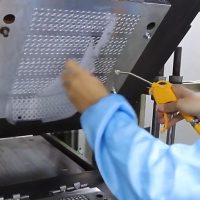
Most custom rubber grommets are produced by compression molding. We operate four dedicated, temperature-controlled hot-air circulation ovens for post-curing silicone (VMQ) grommets and selected EPDM or NBR parts when secondary curing is required by the material specification.
Post-curing time and temperature are set according to the rubber compound, part thickness, and required performance to reduce residual volatiles, improve compression-set performance, and support dimensional stability. A typical dimensional tolerance of ±0.05 mm can be achieved after the part size, geometry, material, hardness, and drawing requirements have been reviewed
From Prototype Quantities to Scalable Production
You can order 10, 20, or 30 pieces when you need a small batch for prototype assembly, installation testing, or product validation. Our standard production MOQ is 100 pieces. Very small runs have a higher unit price because compound preparation, mold setup, press time, curing, and inspection costs are distributed across fewer parts.
Prototype tooling is quoted separately. Tooling and adjustment charges can also be slightly higher because the mold still requires machining, fitting, and trial runs even when only a few samples are ordered. Once your design is approved, production can scale to a capacity of up to 1,000,000 rubber grommets per month.
Clear Tooling, Sample, and Production Lead Times
Custom tooling typically takes 7–10 days. After the mold is completed, sample production normally takes 5–7 days. Mass production typically takes 10–15 days from receipt of the deposit, depending on quantity, design complexity, material, and approval requirements.
Inspection Records and Batch Traceability
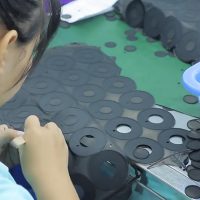
Every part receives 100% visual inspection, and critical dimensions are checked on every piece. Additional non-critical dimensional verification is performed at a 30% sampling ratio.
Inspection records and batch traceability are maintained throughout production. FAI, COA, COC, and PPAP support is available when specified for your project.
Custom Molded Rubber Grommets Designed Around Your Assembly
A rubber grommet may be a small component, but its fit affects how well your wire, cable, hose, or tube is protected as it passes through a metal or plastic panel. The right design cushions sharp edges, holds the routed component in position, reduces vibration and strain, and can support dust or moisture sealing when the geometry is properly engineered and tested.
When you select the nearest catalog size, a mismatch in groove diameter, groove width, inside diameter, hardness, or material can cause difficult installation, loose retention, cable abrasion, rubber swelling, cracking, or leakage during service.
RiseUp develops custom made rubber grommets around your panel hole, panel thickness, cable or hose diameter, operating environment, and assembly method. Whether you provide a drawing, an existing sample, or only application details, our team helps translate your requirements into a manufacturable part for sample validation and repeat production
Custom Molded Rubber Grommets By RISEUP
You are not limited to catalog sizes or standard grommet designs. RiseUp manufactures custom rubber parts around your panel opening, panel thickness, cable or hose size, installation method, operating environment, and performance requirements.

Open Rubber Grommets
Rubber open grommets provide a protected passage through panels, enclosures, and equipment housings for wires, cables, hoses, and tubes.
Each rubber pass through grommet or rubber panel grommet can be customized to your required inside diameter, panel hole diameter, groove width, flange dimensions, material, hardness, and installation conditions.

Blind Rubber Grommets
Rubber blind grommets close unused panel holes while protecting the opening from dust, contact, and environmental exposure.
They can also be developed as blanking rubber grommets or closed rubber grommets according to your panel thickness, hole dimensions, retention requirements, material, and required sealing conditions.

Rubber Grommet plug
A rubber grommets plugs provides a removable or permanent solution for closing holes in panels, housings, machinery, and other assemblies.
Your rubber hole plug grommet can be customized for the required hole diameter, panel thickness, insertion force, pull-out resistance, flange profile, material, hardness, and operating environment.

Self Sealing Rubber Grommets
Self sealing rubber grommets use a flexible membrane, sealing lip, or controlled interference fit to seal around a cable, wire, or other inserted component.
The sealing structure is designed around the actual cable diameter, panel opening, panel thickness, installation method, pressure conditions, and exposure environment. Waterproof or watertight performance must be confirmed through the agreed assembly-specific testing method.

Split Rubber Grommets
Rubber split grommets can be installed around an existing cable, hose, wire, or harness without disconnecting or removing the assembled component.
The split position, joint profile, inside diameter, groove dimensions, material, and hardness can be customized to support easier installation while maintaining the required protection and retention.

Top Hat Rubber Grommets
Rubber top hat grommets feature an extended sleeve or flange that provides additional coverage, positioning, insulation, or protection around a panel opening.
Each flanged rubber grommet can be manufactured with a customized flange diameter, sleeve length, inside diameter, groove profile, wall thickness, material, and hardness to suit your assembly.

Threaded Rubber Grommet
A threaded rubber grommets is designed for screw-in installation or mechanical retention when a conventional push-in grommet cannot provide the required positioning or holding force.
The thread profile, pitch, engagement length, flange, sealing surface, material, and hardness are developed after reviewing the mating component and installation requirements.

Angled Rubber Grommet
An angled rubber grommets guides a cable, hose, or wire away from the panel at a controlled direction, helping reduce sharp bending and interference with nearby components.
The outlet angle, bend radius, passage diameter, flange dimensions, wall thickness, material, and hardness can be customized around your available installation space and routing requirements.

Rubber Vibration Grommet
Rubber vibration grommets are molded mounting interfaces used between equipment panels, brackets, housings, and supported components. Their purpose is to provide a compliant rubber connection while matching the available mounting space and hardware structure.
The inner diameter, outer diameter, flange, wall thickness, compression features, mounting hole, and installation method can be developed around the mating components. Before tooling, RiseUp reviews the panel structure, supported part, static load, assembly method, and required movement clearance.

Wire Harness Rubber Grommets
A wire harness rubber grommets protects wiring as it passes through sheet metal, equipment panels, automotive components, electrical enclosures, and other assemblies.
We can customize a wiring harness rubber grommet, rubber cable grommet, or rubber wire grommet with one or multiple passages according to your harness layout, cable diameter, panel dimensions, strain-relief requirements, and operating environment.
Performance Designed for Your Application
A rubber grommet performs reliably only when its material, hardness, geometry, and fit are matched to the actual assembly. RiseUp develops custom rubber grommets around your operating temperature, environmental exposure, sealing requirements, mechanical load, and installation conditions.

Waterproof Rubber Grommets
A rubber waterproof grommet can be designed with sealing lips, flexible membranes, controlled interference, or compressed sealing surfaces to help prevent water from entering through a panel opening.
The design must be matched to the actual cable diameter, panel hole, panel thickness, water exposure, pressure conditions, and assembly method. Waterproof or watertight performance is confirmed only after the agreed assembly-specific test.

High Temperature Rubber Grommets
High temperature rubber grommet are developed using a compound selected for the required operating temperature, exposure duration, surrounding media, and mechanical conditions.
Selected silicone compounds are commonly considered for high-heat applications. However, the final material must be evaluated against continuous and peak temperatures, compression requirements, aging conditions, and your application specifications. Heat resistant rubber grommets can also receive controlled post-curing when required by the selected material specification.

Food Safe Rubber Grommets
When your application involves food-processing equipment or potential food contact, food safe rubber grommets can be manufactured from a documented material grade selected for the applicable requirement.
The requested regulation, contact conditions, operating temperature, cleaning process, and material documentation must be reviewed before production. We can provide relevant material and inspection documents when agreed, while proprietary rubber formulations remain confidential.

Anti Vibration Rubber Grommets
Anti -vibration rubber grommets are developed for assemblies that need to control transmitted vibration, impact, or movement during operation. Performance is evaluated through the combined effect of rubber hardness, compression, dynamic load, displacement, operating temperature, and mounting preload.
When required, RiseUp can perform installation testing with the customer’s mating product to verify fit, compression, movement control, and the agreed vibration-isolation requirements before mass production.
.

Flexible Rubber Grommets
Flexible rubber grommet support easier installation and can accommodate limited movement or dimensional variation within an assembly.
Flexibility is controlled through the selected rubber material, Shore A hardness, wall thickness, flange design, groove profile, and opening dimensions. RiseUp offers a typical hardness range of 30–70 Shore A, subject to material and design evaluation.

Sealed Rubber Grommets
Sealed rubber grommets help restrict the entry of dust, moisture, and other contaminants where wires, cables, hoses, or components pass through a panel.
Depending on the assembly, the sealing structure may use an interference fit, flexible lip, membrane, extended sleeve, or compressed flange. The required sealing level must be defined against the actual mating components, environment, and agreed test method.

Heavy Duty Rubber Grommets
Heavy duty rubber grommets are developed for machinery, industrial equipment, vehicles, marine assemblies, and other applications where the component may face repeated installation, abrasion, vibration, or mechanical stress.
Material selection, flange thickness, groove engagement, wall thickness, edge protection, and retention force are designed around your panel and operating conditions. Final durability requirements can be incorporated into the inspection or validation plan.
Rubber Grommet Material Options
The right rubber material is determined by the conditions your grommet must withstand—not by color or hardness alone. Operating temperature, contact media, outdoor exposure, mechanical load, vibration, regulatory requirements, and expected service life must all be considered.
We are professional rubber grommet supplier in China,our compounds NBR, EPDM, NR, CR, silicone, and SBR rubber in-house, with a typical hardness range of 30–70 Shore A. Internal compounding helps us control material preparation, batch consistency, color, hardness, and production scheduling.
We also operate four dedicated post-curing units. They support secondary curing for silicone (VMQ) grommets and selected EPDM or NBR compounds when post-curing is required by the approved material specification
Selection Scenarios: What should you pick?
| Material | Common Name | Temp Range | Oil Resistance | UV / Weather | Best Application |
| SBR | Styrene-Butadiene | -40°c to 110°c | Poor | Poor | General Purpose / Indoor. The most economical choice for office equipment and indoor electronics. |
| Buna-N | Nitrile (NBR) | -40°c to 120°c | Excellent | Poor | Automotive / Machinery. The standard for Mil-Spec (MS) grommets. Essential where oil/grease is present. |
| EPDM | Ethylene Propylene | -50°c to 150°c | Poor | Excellent | Outdoor / Solar / Marine. Resists sunlight and ozone for decades. Never use for oil/fuel applications. |
| Silicone | – | -60°c to 240°c | Poor | Excellent | High Heat / Medical. Remains flexible in extreme temps. Ideal for lighting fixtures and ovens. |
| Neoprene | Chloroprene | -40°cto 120°c | Good | Good | HVAC / Industrial. A balanced “all-rounder” with moderate resistance to both oil and weather. |

EPDM Rubber Grommets
EPDM rubber grommet perform particularly well in outdoor equipment, water-handling assemblies, marine components, automotive cooling systems, and products exposed to ozone, UV, weathering, water, steam, or glycol-based coolants.
When the assembly will be in prolonged contact with petroleum oil, gasoline, diesel, or another hydrocarbon fuel, we normally move to NBR or a different oil-resistant elastomer instead of EPDM.

Silicone Rubber Grommets
Silicone rubber grommet are a strong choice when the part must remain flexible under demanding temperature conditions or resist ozone and weathering. They are also widely considered for electrical insulation, clean assemblies, and projects requiring customized colors.
silicone rubber high temperature grommets can be produced from an appropriate silicone grade and post-cured when required by the material specification. Standard silicone is the wrong choice for severe abrasion, repeated tearing, or prolonged petroleum-fuel contact. Food-contact applications also require a specifically documented grade; ordinary silicone is not food safe by default.

Buna-N Rubber Grommets
Nitrile Rubber Grommets are commonly used in industrial machinery, hydraulic equipment, automotive components, and assemblies exposed to petroleum oils, lubricating grease, and selected fuels.
Nitrile is also known as NBR or Buna-N, so Buna-N rubber grommets belong to the same general material family. Because NBR ages poorly under continuous ozone, UV, and outdoor weather exposure, EPDM or CR is usually the better starting point for long-term outdoor applications. Glycol-based brake fluids also call for a different material family.
Neoprene Rubber Grommets
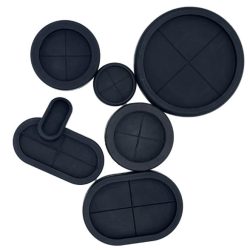
Neoprene rubber grommets are made from chloroprene rubber, also known as CR. They provide a balanced combination of weather resistance, ozone resistance, mechanical durability, and moderate oil resistance for machinery, electrical equipment, transportation components, and general outdoor assemblies.
For components that remain immersed in gasoline or hydrocarbon fuels, or where strong resistance to petroleum oil is essential, NBR is generally a more appropriate material than CR.

Natural Rubber Grommets
Natural rubber grommets are made from NR, an elastomer known for high elasticity, resilience, and vibration-damping performance. They are suitable for machinery mounts, vibration isolation, impact protection, and assemblies involving repeated movement in controlled indoor environments.
Natural rubber does not belong in assemblies exposed to petroleum oils or fuels for long periods. Continuous outdoor exposure to ozone, UV, and weathering will also shorten its service life. We normally evaluate NBR for oil-contact applications and EPDM or CR for long-term outdoor use.

SBR Rubber Grommets
SBR rubber grommets are made from styrene-butadiene rubber. They offer a practical, cost-controlled option for general indoor machinery, impact protection, abrasion-resistant components, and non-critical industrial assemblies.
Once an application involves petroleum oils, fuels, or continuous exposure to ozone, UV, and outdoor weathering, SBR is no longer an appropriate choice. Depending on the environment, we would normally evaluate NBR, EPDM, or CR instead.
What We Need to Select Your Rubber Material
You do not need to specify a rubber compound before contacting us.
Provide as much of the following information as possible, and our engineering team will recommend a suitable material family and hardness:
- Continuous and peak operating temperatures
- Contact liquids, gases, oils, fuels or chemicals
- Chemical concentration and exposure duration
- Indoor, outdoor, UV, ozone or marine exposure
- Required hardness, color and surface finish
- Mechanical load, vibration or repeated movement
- Sealing, insulation or flame-performance requirements
- Required material declarations, test reports or compliance documents
- Expected product life and known failure conditions
Where required and agreed, we can provide FAI, COA, COC, PPAP, inspection records, and batch traceability. We identify the approved material family and provide the agreed supporting documents without disclosing confidential rubber formulations.
Why OEM Buyers Choose RiseUp Rubber
A custom rubber grommet project involves more than molding a part. You need a supplier that can understand the application, build the tooling, control the rubber compound, maintain consistent production, verify quality, and communicate before a problem affects your delivery.
As a rubber grommet suppliers,we have 20 years of custom rubber manufacturing experience, RiseUp manages these critical stages within one factory.
1. Engineering Support From Drawing to Installation
You can start with a 2D or 3D drawing, an existing grommet, a damaged part, clear photographs, or information about the mating assembly. We accept reverse-engineering projects and can perform installation testing with your product when required.
Our team reviews the panel opening, panel thickness, cable or hose diameter, material, hardness, tolerances, environment, and installation method before tooling begins.
Once your project passes our technical and commercial evaluation, we provide free design and sample support
2. In-House Tooling With Clear Ownership
Your mold is developed inside our factory using five CNC machines, six EDM machines, five grinders, and six milling machines. Keeping mold development in-house helps our engineering, tooling, and production teams respond more efficiently when a dimension or structure needs adjustment.
Typical mold production takes 7–10 days. Samples are normally completed within 5–7 days after the tooling is finished.
Customer-funded tooling belongs to the customer, and we normally store the mold for 10 years for repeat production.
3.Production That Scales With Your Project
You can begin with 10, 20, or 30 pieces for prototype assembly, installation testing, or product validation. Because setup and processing costs are distributed across fewer parts, very small runs carry a higher unit price and may require a higher tooling or adjustment cost.
Our standard production MOQ is 100 pieces. Once your project moves into volume production, six hydraulic presses support stable output: three 250-ton presses, one 300-ton press, and two 500-ton presses.
Our rubber grommet production capacity reaches up to 1,000,000 pieces per month.
4.Rubber Compounding and Post-Curing Under One Roof
RiseUp compounds NBR, EPDM, NR, CR, silicone, and SBR rubber in-house, with a typical hardness range of 30–70 Shore A. This gives us direct control over compound preparation, hardness, color, batch identification, and production scheduling.
Four dedicated post-curing units support silicone grommets and selected EPDM or NBR compounds when secondary curing is required by the approved material specification.
We confirm the material family and provide agreed supporting documents while keeping proprietary rubber formulations confidential.
5.Inspection Records You Can Trace
Every rubber grommet receives 100% visual inspection, and critical dimensions are checked on every piece. Additional non-critical dimensions are verified using a 30% sampling ratio.
Inspection records are connected to production batches, giving you traceability when reviewing a shipment or investigating a quality concern. Depending on the project requirements, we can provide FAI, COA, COC, PPAP, dimensional inspection records, and batch traceability records.
A typical dimensional tolerance of ±0.05 mm can be achieved on suitable designs, subject to material, geometry, mold structure, and drawing review.
6.Production Updates Before You Have to Ask
Mass production normally takes 10–15 days after the deposit is received. During production, we provide daily progress updates so you can follow the status of your order instead of waiting until the planned shipping date.
Emails are normally answered within 30 minutes, including inquiries received outside standard China working hours. If we identify a risk that could affect the agreed schedule, we communicate it 3–5 days in advance and provide the current status and proposed solution.


Where Rubber Grommets Protect Critical Connections
Rubber grommets are used wherever a wire, cable, harness, hose, tube, pipe, or mounted component passes through or connects with a harder surface.
Their role changes with the application. Some protect against sharp edges, while others control movement, reduce vibration, retain a harness, restrict contaminants, or help form a seal. The following applications illustrate the problems the grommet must solve in the finished assembly.

Electrical Rubber Grommets
Electrical rubber grommets are installed where wires or cables pass through electrical enclosures, control cabinets, power supplies, consumer electronics, and metal equipment panels.
They separate the cable jacket from sharp panel edges, keep the cable centered in the opening, and reduce bending or pulling at the entry point. A poor fit can leave the cable exposed to cutting, allow the grommet to move out of position, or create an unwanted gap around the opening.
Panel thickness, hole dimensions, cable diameter, cable movement, and operating temperature are the key application factors. Electrical insulation or flame performance requires a compound with the corresponding documented properties.

Wire Harness Rubber Grommet
A wire harness rubber grommet is used where a bundled harness passes through a vehicle body, machinery panel, robotic joint, electrical enclosure, or other structural opening.
It protects the harness from chafing, keeps multiple wires organized, supports branch points, and limits excessive movement near the panel. A wiring harness rubber grommet must retain the harness without squeezing the cables too tightly or creating a sharp bend close to the opening.
Harness layout, cable quantity, individual wire diameters, bundle diameter, bend radius, movement direction, and available installation space all affect the final fit.

Automotive Rubber Grommets
Automotive rubber grommets appear in body panels, doors, engine compartments, lighting systems, sensor connections, wiring routes, tubes, brackets, and interior assemblies.
Their job may be to prevent wire damage, control noise and vibration, keep water or dirt away from an opening, or isolate one component from another. A grommet used inside a vehicle cabin does not face the same conditions as one installed near an engine, wheel area, fuel system, or exterior body panel.
Temperature, oil or coolant exposure, weathering, vibration, movement, and assembly force must therefore be considered according to the exact vehicle location.

Fuel Tank Rubber Grommet
A fuel tank rubber grommet or gas tank rubber grommet is positioned around a tube, valve, fitting, cable, or other component entering the tank.
The grommet must maintain the required fit while exposed to fuel, vapor, temperature changes, compression, and movement. An incorrect rubber compound may swell, harden, soften, or shrink after fuel exposure, which can reduce retention or create a leakage path.
The exact fuel composition, vapor exposure, operating temperature, pressure conditions, contact duration, and expected service life must be established before the material and sealing structure are approved.

Industrial Rubber Grommets
Industrial rubber grommets are used in machinery, robotic systems, hydraulic power units, production equipment, motors, pumps, and control systems.
They protect cables and hoses where vibration, repeated movement, oil contamination, abrasion, and metal edges could cause gradual damage. They may also isolate mounted components and reduce the transfer of vibration or noise through the equipment frame.
The correct grommet depends on the movement cycle, mechanical load, panel structure, contact media, abrasion level, and maintenance environment of the machine.

Rubber Grommets for Sheet Metal
Rubber grommets for sheet metal cover the edge of a punched or machined hole so that the metal does not cut into a wire, cable, hose, or tube.
The groove width needs to match the sheet thickness. If the groove is too wide, the grommet can move, rotate, or fall out. If it is too narrow, installation becomes difficult and the grommet may deform instead of seating correctly.
Hole shape, edge radius, burr condition, panel thickness, flange coverage, and the movement of the passing component all influence the installation.

Rubber Pipe Grommet
A rubber pipe grommet is used where a rigid or semi-rigid pipe passes through a panel, housing, plumbing component, sanitary assembly, or marine structure.
It separates the pipe from the surrounding surface, reduces direct metal-to-metal contact, accommodates limited movement or misalignment, and can help restrict dust or moisture around the opening. In some assemblies, it also contributes to sealing.
When the grommet forms part of a pressure or leakage boundary, it must be treated as an engineered sealing component. Pipe diameter, wall position, pressure, fluid, temperature, and the required leakage test must then be defined.

Rubber Hose Grommet
A rubber hose grommet protects a flexible hose as it passes through machinery, hydraulic equipment, oil and gas equipment, marine systems, or structural panels.
It keeps the hose away from sharp edges, supports the required routing, reduces chafing, and helps prevent excessive pulling or bending near the panel. An opening that is too small can compress or kink the hose, while insufficient retention can allow the grommet to move out of the panel.
Hose outside diameter, bend radius, movement, panel thickness, vibration, contact media, and pull direction are central to the application. A hose grommet is not a pressure seal unless that function is specifically designed and tested.
How Your Custom Rubber Grommet Project Moves Forward
A custom project becomes easier to manage when every technical and commercial decision is confirmed at the right stage. Use the tabs below to understand what happens after you contact RiseUp.
Start With the Information You Already Have
You can contact us with a drawing, existing sample, damaged part, clear photographs, installation dimensions, or information about the mating component. A complete technical package is helpful, but it is not required for the first discussion.
We first review what the grommet must protect, where it is installed, what passes through it, and which conditions could cause failure. If important information is missing, we will identify the dimensions or application details needed for the next step.
Emails are normally answered within 30 minutes, including inquiries received outside standard China working hours.
[STAGE CHECKLIST]
- Product drawing, sample or photographs
- Installation position and mating components
- Panel hole size and panel thickness
- Cable, harness, hose, tube or pipe dimensions
- Operating environment and contact media
- Prototype and estimated production quantities
- Target delivery schedule

Confirm the Product Before Tooling Begins
Once the application is understood, the product definition is confirmed around the panel opening, grommet profile, material, hardness, critical dimensions, tolerances, surface requirements, and installation method.
This is also the stage to define inspection requirements, validation methods, tooling ownership, expected quantities, and the commercial terms of the project.
Once your project passes our technical and commercial evaluation, we provide free design and sample support.
[STAGE CHECKLIST]
- Approved drawing or agreed sample dimensions
- Rubber material and hardness
- Critical and non-critical dimensions
- Applicable dimensional tolerances
- Color and surface requirements
- Sealing or performance test requirements
- Tooling price and ownership
- Sample and production plan

Turn the Approved Design Into a Production Sample
After the tooling plan is approved, mold production normally takes 7–10 days. The first samples are usually completed within 5–7 days after the tooling is finished.
Samples can be checked against the approved dimensions and, when required, tested with the customer’s mating product. Any necessary dimensional or structural adjustments are reviewed before the project enters mass production.
[STAGE CHECKLIST]
- Visual appearance
- Critical dimensions
- Panel installation
- Cable, hose, pipe or harness fit
- Retention and removal
- Movement or vibration
- Agreed sealing or performance tests
- FAI or other approval documents

Maintain Visibility During Mass Production
Mass production normally takes 10–15 days after the deposit is received. During this period, customers receive daily progress updates rather than waiting until the planned shipping date for a status report.
Every rubber grommet receives 100% visual inspection, and critical dimensions are checked on every piece. Additional non-critical dimensions are verified using a 30% sampling ratio.
If a production risk could affect the agreed schedule, we communicate it 3–5 days in advance with the current status and proposed response.
[STAGE CHECKLIST]
- Compound and batch identification
- Mold and process confirmation
- Daily production-progress reporting
- 100% visual inspection
- Critical dimensions checked on every part
- 30% sampling for additional non-critical dimensions
- Inspection records and batch traceability

Keep the Approved Product Ready for Future Production
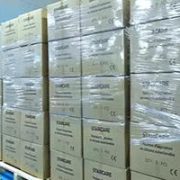
Before delivery, the quantity, packaging requirements, inspection status, and agreed project documents are checked against the order.
Depending on the approved requirements, shipment documents can include FAI, COA, COC, PPAP, dimensional records, and batch traceability information.
Customer-funded tooling remains the customer’s property. We normally store the mold for 10 years, making it easier to restart an approved product for repeat orders.
[STAGE CHECKLIST]
- Finished quantity
- Agreed packaging and product identification
- Inspection status
- Required approval documents
- Batch traceability
- Delivery information
- Tooling record for repeat production

What OEM Customers Say About Working With RiseUp
Finding the exact grommets size is critical for vibration control and NEMA compliance. We maintain an extensive inventory ranging from precision eyelet sizes for electronics to large rubber grommets (often searched as big rubber grommets) for heavy industrial piping.
Standard & Custom Dimensions
We stock both standard rubber grommet sizes (MS/AN spec) and fully metric rubber grommets. Whether your application requires a fit for thin sheet metal or a robust rubber grommet 1/4 panel thickness, we have the mold ready.
Grommets Size Chart & Resources Don’t guess the fit. Reference our detailed rubber grommet size chart (or grommet sizing chart) below. This grommet hole size chart lists all critical rubber grommet dimensions—including Groove Width (GW) and Groove Diameter (GD)—making it easy to filter rubber grommets by size.
Production Visibility and Delivery Communication

Case 01 — U.S. Automotive Components Customer
Challenge: The customer needed a custom grommet for an automotive wiring harness passing through a sheet-metal panel. The original design did not provide a consistent fit around the panel opening and could leave the wiring exposed to edge abrasion.
RiseUp: Solution RiseUp reviewed the panel hole, panel thickness, harness diameter and retention requirements. We developed an NBR molded wire-harness grommet with a customized groove and flange structure, then supported installation testing before mass production.
Result: The approved design improved the fit between the grommet, panel and wiring harness. The project moved into stable production with 100% visual inspection, critical-dimension checks on every piece and batch traceability to support repeat orders.
Engineering Response and Problem Solving

Case 02 — European Industrial Equipment Customer
Challenge: The customer’s equipment used a non-standard opening and required a special-shaped sealing grommet. Standard catalog products could not match the installation position, sealing structure and mating components.
RiseUp :Solution RiseUp reviewed the customer’s drawing, sample and installation conditions. The engineering team adjusted the grommet profile, sealing surfaces and retention structure around the actual equipment. We also supported installation testing with the customer’s mating components before production approval.
Result: The customized grommet was verified in the intended assembly and prepared for repeat manufacturing. The customer received a solution developed around the actual equipment rather than a standard part selected only by nominal size.
Quality Consistency and Repeat Production

Case 03 — Japanese Electronics Equipment Customer
Challenge: The customer needed a small quantity of custom grommets for electronic equipment validation. Although the initial order volume was limited, the parts still required stable dimensions and consistent assembly performance.
RiseUp: Solution RiseUp accepted the small-batch requirement and developed the product around the customer’s installation dimensions. Prototype quantities can start from 10, 20 or 30 pieces when required; the standard production MOQ is 100 pieces. Each part received 100% visual inspection and critical-dimension checking, while other dimensions were verified through the agreed 30% sampling plan.
Result: The customer completed small-batch assembly validation with controlled part consistency. After the design was approved, the product could move into repeat production under the same inspection and batch-traceability controls.

Installation Mastery: How to Install Rubber Sealing Grommets Like a Pro
Forcing a grommet into a hole with a screwdriver is a guaranteed way to tear the rubber or damage your panel paint. To install a grommet quickly and safely—especially stiff Mil-Spec ones—use the industry-standard “S-Fold” technique.
The “S-Fold” Technique (Step-by-Step)
| Problem | Likely Cause | Solution |
| Grommet pops out easily | Groove Width > Panel Thickness | The groove is too wide for the metal sheet. Switch to a grommet with a narrower groove width. |
| Grommet is cut/torn | Panel Hole too small | You are forcing a grommet into a hole that is too tight. Increase the panel hole size or choose a smaller grommet. |
| Wire insulation is chafing | ID too loose | The Inner Diameter (ID) is too large, allowing the wire to rub against the rubber interior. Choose a smaller ID for a snug fit. |
Questions Before Starting a Custom Project
Yes. Send the drawing, sample, photographs, dimensions, or application details you currently have. We will review them first and identify what additional information is required before the quotation can be finalized.
The final fit depends on the complete assembly, not only the dimensions of the loose part. Panel thickness, hole condition, cable or hose size, compression, movement, and installation direction can all change how the product performs after assembly.
Changes to the drawing, material, hardness, tolerance, quantity, testing, approval documents, packaging, or delivery requirements can affect the quotation and schedule. These items should be confirmed before tooling begins whenever possible.
Yes. The sample stage is used to review installation, critical dimensions, fit, and agreed performance requirements.
If an adjustment requires mold modification or new tooling, the additional cost and time will be confirmed before the change is made.
Yes. We accept reverse-engineering projects based on an existing product.
A worn or damaged sample may no longer represent the original dimensions, so photographs of the installation, mating-component dimensions, and the intended fit are helpful when rebuilding the design.
No. The detailed compound formulation remains confidential.
We can confirm the approved material family and provide agreed material declarations, COA, COC, test reports, or other supporting documents without releasing proprietary formulation information.
Testing, FAI, PPAP, COA, COC, and other document requirements should be stated before quotation and tooling.
They can affect material selection, sample quantity, inspection planning, production cost, and lead time. Requesting them after production begins may require additional testing or new samples.
Send us the purchase order number, batch information, photographs, measured dimensions, affected quantity, and the conditions under which the problem occurred.
We use the batch and inspection records to identify the affected scope, review the cause, and communicate a containment and corrective solution.
Rubber Grommets Production Process






Releted Products
"Take The Efficient Booster For Your Business Now "

Alan Chen
Product Sales Manager & Rubber Specialist at RISEUP
