
Polyurethane vs Rubber for Custom Parts and Tubing
What is Polyurethane and Rubber ?
Polyurethane is not one grade. Cast polyurethane, thermoplastic polyurethane and millable polyurethane rubber can differ in hardness range, hydrolysis behavior, rebound, abrasion and processing route. Polyether and polyester systems also respond differently to water, oils and dynamic heat.
Rubber is a material family rather than a single alternative. Natural rubber is often considered for resilience and dynamic behavior; NBR for many oil-related duties; EPDM for weather, water and ozone exposure; silicone for a broad temperature range; and FKM for demanding heat and chemical environments. The final choice still depends on the compound and the application
Core Material Comparison
Decision Factor | Polyurethane Elastomers | Rubber Families | Engineering Note |
Abrasion and tear | Often shortlisted for severe wear and tear loading | Varies widely by NR, NBR, EPDM and other compounds | Match the test to dry, wet or particle abrasion |
Hardness and load | Broad hardness range with elastic load support | Mature soft sealing and dynamic compound options | Hardness alone does not define load capacity |
Compression sealing | Possible but heat, hydrolysis and compression history matter | Many mature low-compression-set formulations | Review compression, temperature and recovery |
Weather exposure | Some systems perform well; formulation confirmation is required | EPDM is commonly evaluated for ozone and outdoor exposure | Confirm UV, ozone, water and temperature cycling |
Oil and chemicals | Depends on ether or ester chemistry and actual fluid | NBR, FKM and other families target different media | Use real fluid, concentration and temperature |
Processing | Casting, injection and extrusion can support thick or bonded parts | Molding, injection and extrusion routes are well established | Volume, geometry, tolerance and tooling drive the route |
Author

Hi, I’m David Xu , Focus on the rubber products industry for 20 years. I design customized rubber products solutions,i brings practical insights into material selection,quality control,and application solutions. I’m here to share industry knowledge and best practices for customers and partners.
- riseuprubber.com
- 2026-11-10
- 22:07
When Polyurethane Enters the Shortlist
Abrasive conveying, rollers, scrapers and wear liners can combine surface wear, tear and localized impact. Polyurethane is often shortlisted because selected systems provide useful abrasion resistance, tear strength and load bearing. Particle shape, sliding speed, contact pressure and heat build-up still need to be verified.
Polyurethane also creates design space when metal or rigid plastic is too hard and a soft rubber deforms too much. Wheels, buffers, coupling elements and bonded coverings may use this balance. Section thickness, heat dissipation, cycle frequency and pre-compression can control service behavior more than nominal hardness
When a Specific Rubber Family Is the Better Starting Point
Outdoor profiles and enclosure seals often begin with EPDM evaluation because long-term ozone, ultraviolet, rain and temperature cycling matter. The design must also address compression set, low-temperature recovery, corner joints, closing force and groove geometry.
Fuel, lubricants, refrigerants, steam, acids, alkalis and cleaners do not affect elastomers in the same way. NBR, FKM, EPDM, silicone and selected polyurethane systems each have boundaries. Compatibility work should record volume change, hardness change and retained strength in the actual fluid and temperature
Common Selection Mistakes
Mistake one is assuming polyurethane always lasts longer. The answer changes with the wear mechanism, dynamic heat, medium, temperature and geometry. Mistake two is treating equal Shore A hardness as interchangeability. Equal hardness does not guarantee equal modulus, rebound, tear, compression set or friction. Mistake three is replacing finished-part validation with generic test-sheet data
Engineering Selection Step
Define the failure mode
Separate wear, tear, compression loss, swelling, thermal aging, fatigue and bond failure.
Quantify the duty
Record continuous and peak temperature, fluid, load, speed, frequency, exposure and target life.
Screen material families
Compare only candidates that address the actual failure mechanism.
Select measurable evidence
Choose hardness, tensile, tear, rebound, compression, abrasion, immersion or aging work as needed.
Validate the finished part
Test actual geometry, tolerance, bond, assembly strain and cycle conditions
Choose the elastomer around the failure mode, not the material name. We help OEMs and industrial buyers compare polyurethane with specific rubber compounds, then turn temperature, media, load, motion and geometry into a manufacturable molded part or rubber tubing specification.
Send a drawing, sample photo or failed part with the application conditions for an engineering review
Illustrative United States Customer Scenario
A United States outdoor-equipment manufacturer originally specified a polyurethane seal because the team associated PU with toughness, abrasion resistance and higher hardness. After field exposure, the seal showed surface cracking, local hardening and reduced recovery at the enclosure corners. Water could enter when the door was repeatedly opened and closed.
The customer found our polyurethane vs rubber comparison while searching for the cause. Instead of assuming that a harder PU grade would solve the issue, we asked for the original compound information, enclosure drawing, groove dimensions, compression, corner-joint design, continuous and peak temperature, sunlight and ozone exposure, cleaning conditions, failure photographs and service history.
The review showed that abrasion was not the controlling failure mode. The seal needed outdoor weather resistance, stable recovery after long compression and reliable corner sealing. This shifted the material discussion from a tougher polyurethane to an EPDM compound developed for weather and compression exposure. The recommendation also included a revised profile transition and controlled compression rather than a material-only substitution.
The sample plan compares the original PU gasket with the proposed EPDM design using dimensional checks, Shore A hardness, hot-air aging, ozone or weathering exposure, compression set and an assembled enclosure leak test. Production is released only after the customer approves the sample in the actual enclosure. Any published improvement in leak rate, recovery or service life must come from an authorized test record
Manufacturing Resources
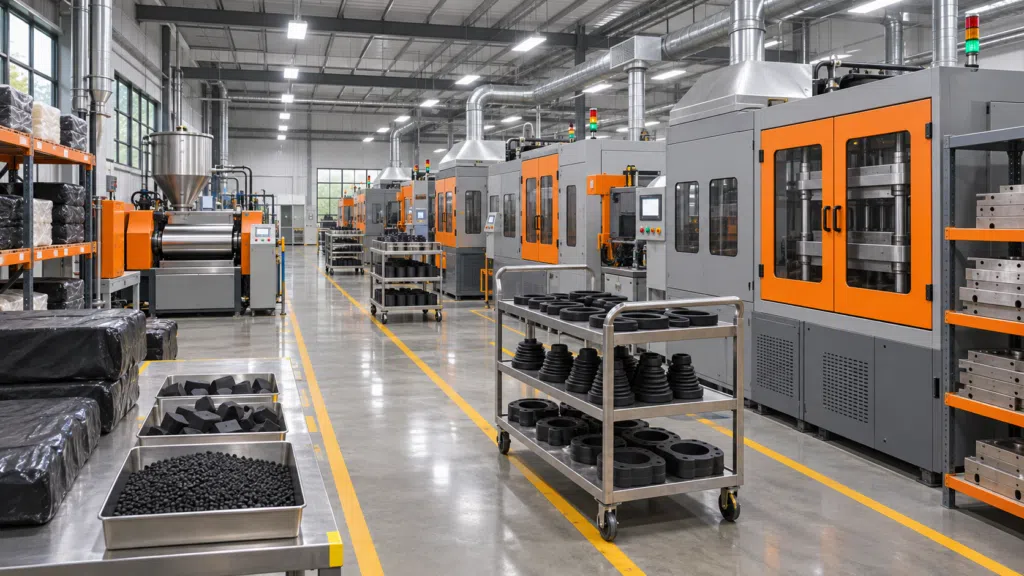
Custom rubber parts move through material identification, mold preparation, controlled molding or curing, trimming, visual inspection and dimensional verification. Extruded rubber tubing requires compound preparation, extrusion control, dimensional monitoring, curing, cutting and final inspection matched to the tube geometry and application. Publish only the processes that the factory actually operates
Testing and Verification Resources
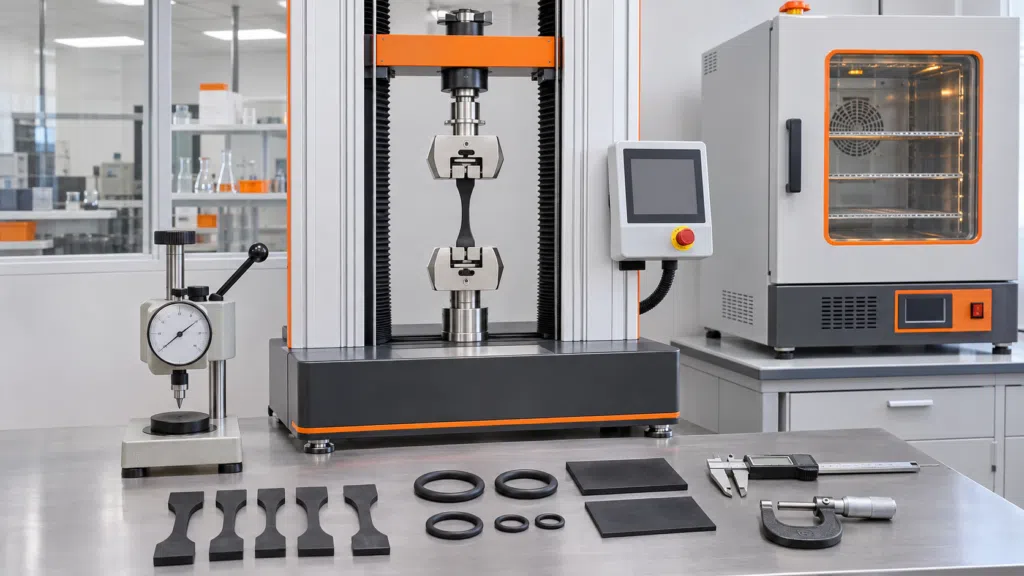
The proposed verification stack includes dimensional inspection, Shore A hardness, tensile and elongation testing, and hot-air aging. Application-specific work may add compression set, media immersion, pressure, pulse, bend or leak tests. Each claim must name the test method, specimen, condition and acceptance rule
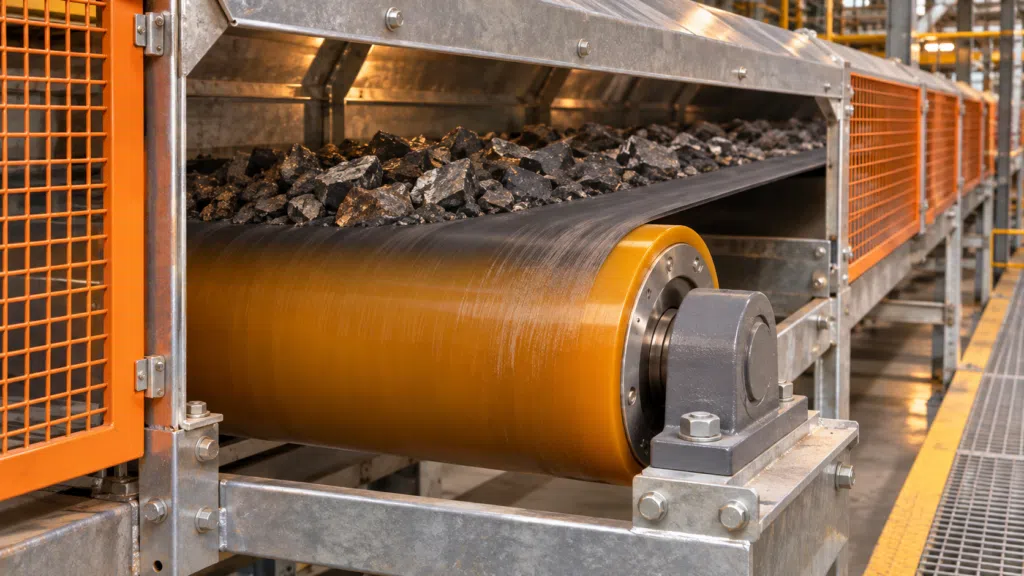
Abrasive Conveying Polyurethane Rollers
Specify aggregate, belt speed, load, diameter, bond design, duty cycle and allowable heat build-up
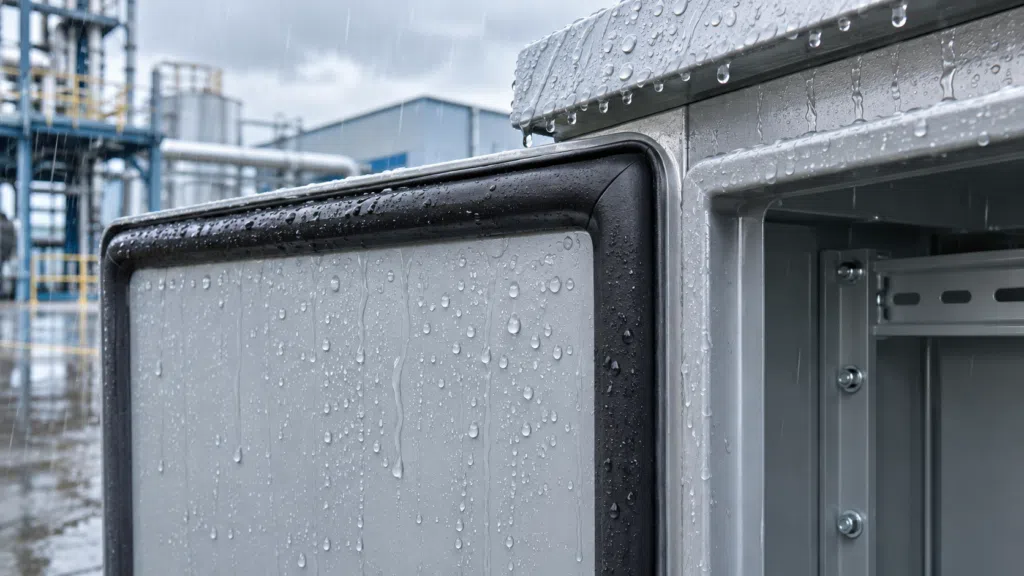
Outdoor EPDM Enclosure Seals
Specify groove, compression, closing force, corner joint, weather exposure and protection target
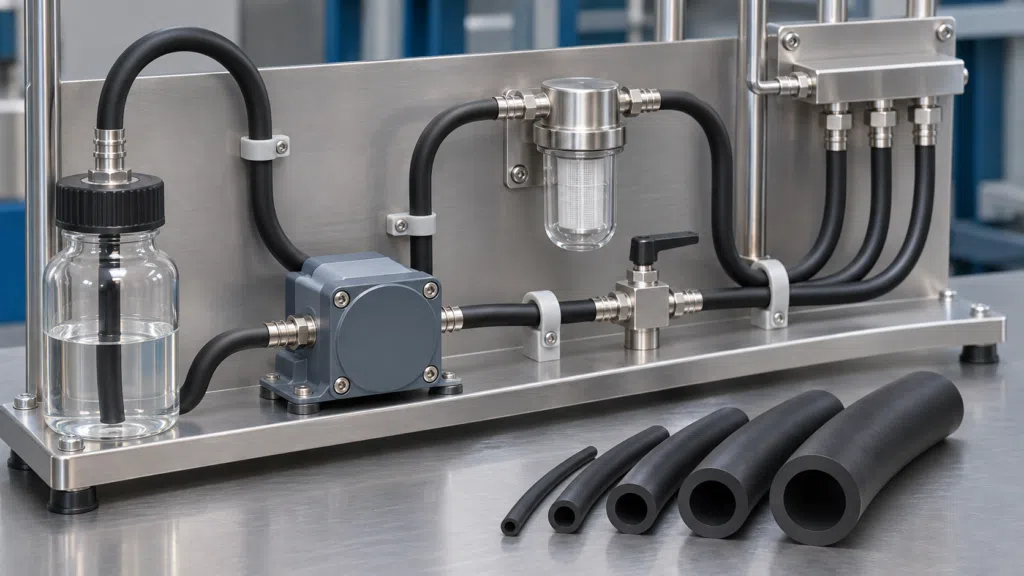
Industrial Rubber Tubing for Fluid Transfer
Specify the medium, concentration, continuous and peak temperatures, inner and outer diameter, wall thickness, bend radius, vacuum or low-pressure condition, length, tolerance and connection method
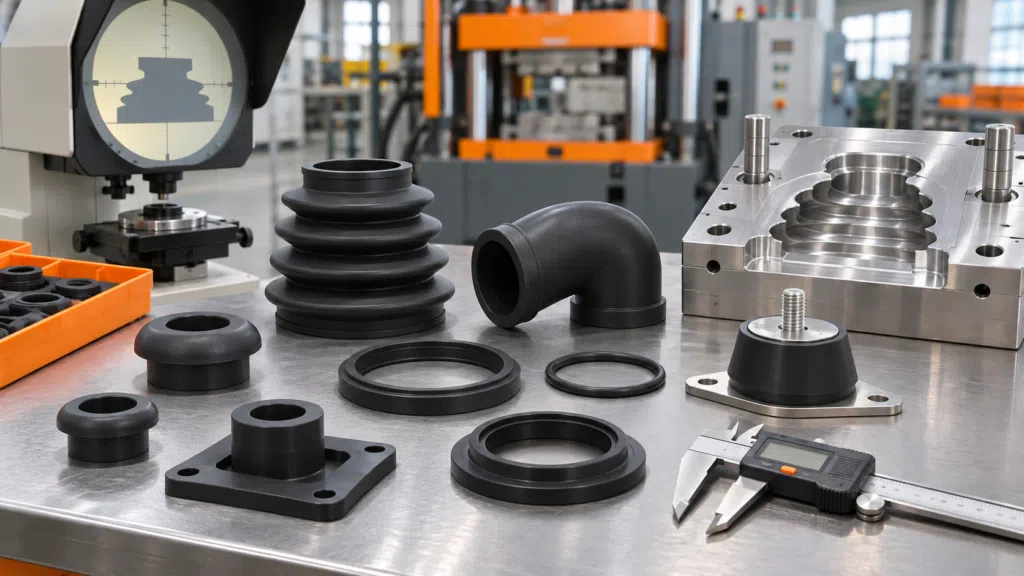
Custom Molded Rubber Parts
Provide drawing revision, sample, assembly, tolerances, flash limits, bonding and current failure evidence
Frequently Asked Questions
Polyurethane elastomers behave elastically, but their chemistry differs from conventional diene rubbers. Some grades are cast or thermoplastic, while millable polyurethane rubber can be mixed and cured on rubber equipment. Specify the polyurethane type and processing route when requesting a quot
Not by dimension alone. NBR, EPDM and polyurethane solve different combinations of oil, weather, water, wear and load. Compare fluid, temperature, hardness, compression, friction and movement before changing the material
Request more than hardness. Depending on the failure mode, ask for tensile, elongation, tear, rebound, compression set, abrasion, fluid immersion, heat aging and low-temperature evidence. Each result should identify the method, specimen and test condition
Variation can come from material mixing, moisture, cure state, post-cure, metal preparation, bonding, dimensions or batch changes. Link the key process parameters to finished-part checks and lot traceabilit
Use an application test when generic material data cannot reproduce assembly strain, pressure pulse, dynamic heat, abrasive contact, media exposure or a safety-critical failure. The acceptance criteria should be agreed before the sample is produced
"Take The Efficient Booster For Your Business Now "

Alan Chen
Product Sales Manager & Rubber Specialist at RISEUP
