
Custom polyurethane gaskets are engineered for industrial interfaces where repeated contact, impact, abrasion and compression fit can shorten the service life of a conventional gasket. We develop solid polyurethane and PU foam gasket solutions around your drawing, sample or actual operating condition
Wear-resistant profiles for repeated-contact interfaces
Custom hardness and geometry for load-bearing gasket fit
Solid PU and PU foam gasket structure options
Drawing-, sample- and application-based development
What Is a Polyurethane Gasket?
A polyurethane gasket is a custom-cut or molded elastomer component used between two mating parts to manage contact, fit, cushioning or controlled separation. It can be designed as a dense solid polyurethane gasket for wear-facing and load-bearing positions, or as a polyurethane foam gasket where lower-force compression and gap conformity are needed. The correct construction depends on the contact force, surface condition, movement and expected service environment
How a PU Gasket Works
A PU gasket works through the relationship between material structure, part geometry and assembly conditions. A solid profile may protect a contact edge or maintain fit under repeated loading. A foam profile may compress into an uneven interface and help absorb variation between mating parts. The correct result depends on hardness or density, thickness, compression space, movement, contact pressure and the surrounding environment
Product Selection Note
A visually similar PU gasket may not deliver the same performance. Material selection should be reviewed when the application involves continuous friction, high load, oil or fluid contact, temperature changes, chemical exposure, sharp edges or repeated movement
| Term | Meaning | Typical Role |
|---|---|---|
| Polyurethane gasket | A gasket made from polyurethane elastomer | Wear control, cushioning, fit or sealing support |
| Solid polyurethane gasket | A dense PU gasket structure | Abrasion resistance, edge strength and load support |
| Polyurethane foam gasket | A compressible PU foam structure | Cushioning, gap compensation and controlled compression |
| Urethane gasket | Another commonly used name for a polyurethane gasket | Industrial material and product search term |
| Custom polyurethane gasket | A PU gasket made to a drawing, sample or application requirement | Fits non-standard geometry and operating conditions |

Built Around Load, Wear and Compression Conditions
A polyurethane gasket should be designed around the way the assembly loads, compresses and contacts the part in service. This section focuses on the design variables that determine functional fit; the next Feature Box explains the material-level benefits behind those choices.
- Polyurethane gasket hardness matches contact force and required deflection.
- Edge radii reduce tearing around holes, corners and narrow bridges.
- Profile thickness follows actual compression space and surface variation.
- Solid and foam structures serve different load and cushioning roles
Key Polyurethane Gasket Advantages

Abrasion Resistance
Polyurethane is often considered when repeated contact, sliding movement or abrasive particles cause a conventional gasket edge to wear too quickly. A correctly selected polyurethane gasket can help maintain the working profile for longer, reduce replacement frequency and protect the mating interface from progressive wear. The actual result depends on contact pressure, surface finish, movement and PU formulation

Tear Resistance
Bolt holes, sharp corners, narrow bridges and internal cut-outs can create concentrated stress that leads to tearing during assembly or service. Polyurethane can be considered when the gasket needs stronger resistance to edge damage in these areas. A suitable profile radius, enough material around openings and the correct hardness help reduce early tear failur

Impact Resistance
Equipment covers, moving guides and heavy-duty interfaces may receive intermittent impact that damages a softer or less durable gasket structure. Polyurethane can help manage this type of mechanical contact by supporting the profile against localized shock. This can help reduce deformation, edge breakdown and unplanned replacement in impact-prone assemblies

Load Bearing Strength
Some gasket interfaces must maintain functional fit while supporting higher contact force, component weight or repeated mechanical loading. Polyurethane can be considered when the part needs more structural support than a basic soft sealing material can provide. Hardness, thickness, contact area and compression space should be reviewed together to prevent overloading or permanent deformation
Why You Choose Polyurethane Gaskets for Wear and Dynamic Contact?
Polyurethane is not selected simply because a gasket needs to be “stronger.” It is considered when the gasket is part of a mechanically demanding interface: one where repeated contact, local force, edge loading, vibration or surface wear can cause a conventional material to lose functional shape too early
When the Gasket Becomes Part of the Wear Path
Some assemblies place the gasket directly beside a moving guide, cover edge, locating surface or repeatedly contacting component. In these cases, the part may experience more than static compression. A polyurethane gasket can be considered when the profile must continue to protect, guide or separate surfaces while exposed to mechanical contact. The design should review movement direction, contact frequency, opposing-surface finish and local pressur
When the Geometry Has Stress Concentration
A gasket may fit the drawing but still fail at bolt holes, sharp corners, narrow bridges or cut-outs where force concentrates. Polyurethane becomes more relevant when the design needs to preserve functional geometry around these locations under assembly load or recurring service stress. The material choice should be paired with adequate radii, material width and thickness rather than relying on hardness alone
When Service Life Matters More Than Initial Part Cost
A lower-cost gasket can become expensive when it wears, tears or loses fit frequently enough to create maintenance work, equipment downtime or replacement risk. Polyurethane can create value when a longer-lasting profile reduces these operational consequences. This is an application-fit decision, not a universal cost claim; the benefit depends on the actual duty cycle, wear mechanism and replacement difficulty
| Application Signal | Why Polyurethane May Be Considered | What Still Needs Review |
|---|---|---|
| Repeated contact near a guide or cover | The profile may need to retain function under mechanical wear | Movement, surface finish and contact pressure |
| Loaded corners, holes or narrow bridges | The design may need better resistance to local edge damage | Radius, material width and thickness |
| Intermittent impact or vibration | The gasket may need to tolerate recurring mechanical disturbance | Load direction, frequency and assembly support |
| Frequent replacement of a conventional gasket | Longer functional life may reduce maintenance disruption | Actual failure mode and service interval |
Solid Polyurethane Gasket or PU Foam Gasket?
“Polyurethane gasket” does not describe one single functional structure. A solid polyurethane gasket and a polyurethane foam gasket can serve very different purposes in an industrial assembly. The correct choice begins with the job the part must perform at the interface: resist mechanical wear, support a loaded edge, compress around variation, cushion contact or compensate for an uneven ga
Solid Polyurethane Gaskets for Wear and Mechanical Support
A solid polyurethane gasket is generally considered when the part must retain a defined profile under repeated contact, local loading or edge stress. It can be relevant for equipment covers, guide-adjacent interfaces, protective profiles and other locations where abrasion, tearing or impact can shorten the life of a softer material. Hardness, thickness, contact area and movement must be reviewed togethe
PU Foam Gaskets for Compression and Gap Compensation
A polyurethane foam gasket is generally considered when the interface needs controlled compression, cushioning or accommodation of surface variation. It can help a cover, panel or enclosure fit across an uneven gap without relying on excessive fastening force. Foam density, compressibility, recovery behavior, thickness and the actual exposure environment should be reviewed before selecting a PU foam gasket structure
| Selection Question | Solid Polyurethane Gasket | PU Foam Gasket |
|---|---|---|
| Is repeated wear or direct mechanical contact the main concern? | Usually the more relevant direction | Usually not the first choice |
| Does the part need to support an edge or localized load? | May be considered | Requires compression review |
| Is gap variation or cushioning the main problem? | May be too firm for the interface | Usually the more relevant direction |
| Does the interface need broad, controlled compression? | Depends on geometry and load | May be considered after recovery review |
| Is the application exposed to actual operating media or temperature change? | Review formulation and service conditions | Review foam structure and service conditions |
Do not choose solid PU or PU foam only by appearance. A foam gasket should not automatically replace a solid profile in a high-wear contact path, and a dense solid profile should not automatically be used where the assembly needs low-force compression and gap accommodation
We Provide Different Polyurethane Gasket Structures and Manufacturing Routes For You
Polyurethane gasket options should be understood through two separate decisions. The first is the material structure needed by the interface: solid PU for a denser mechanical profile, or PU foam for controlled compression and cushioning. The second is the manufacturing route needed to achieve the geometry: die cutting for suitable flat-sheet profiles, or molding for three-dimensional forms. Custom development is addressed separately in the next modul
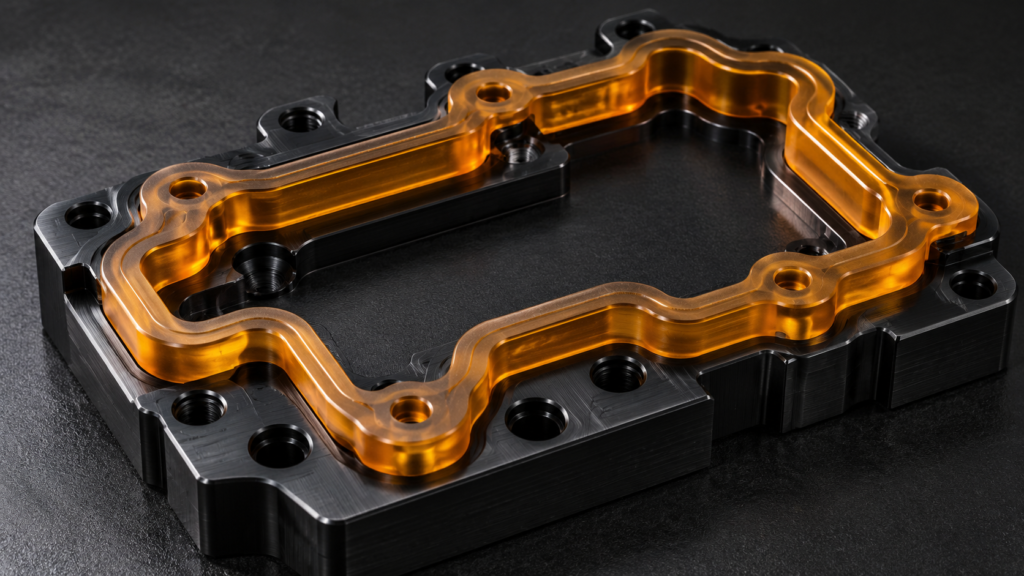
Solid Polyurethane Gasket
Solid polyurethane gaskets are a recognised product category made from dense polyurethane elastomer rather than foam. They are considered when the application requires a defined mechanical profile with greater resistance to wear, tearing, impact or localized loading. Final suitability depends on compound selection, hardness, thickness, contact conditions and the actual operating environment
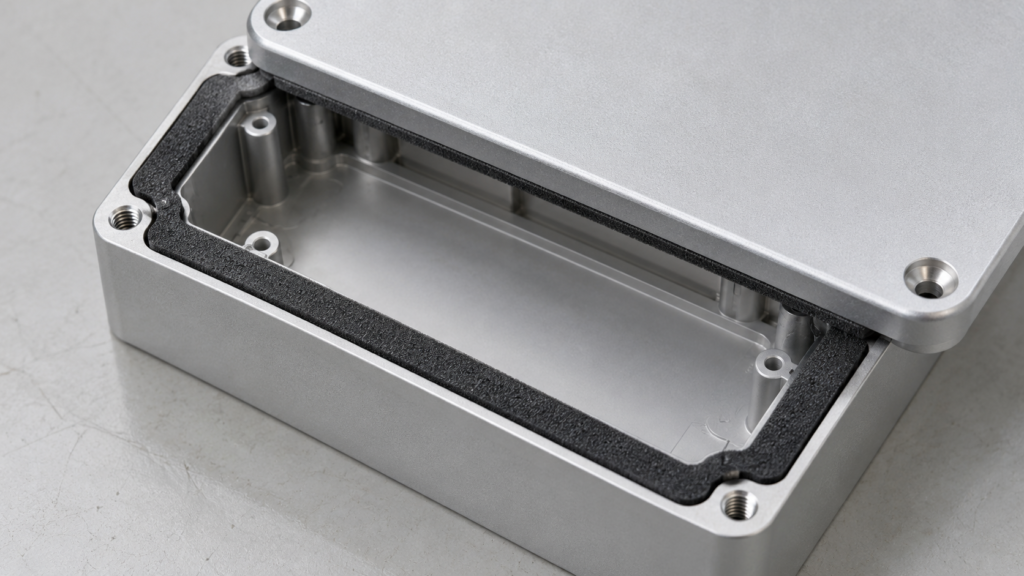
Polyurethane Foam Gaskets
Polyurethane foam gaskets are a separate product category for interfaces that need controlled compression, cushioning or gap compensation. They can be considered when an enclosure, panel or cover must conform to surface variation without relying on excessive fastening force. Foam structure, density, recovery behavior, compression requirement and exposure conditions should be reviewed before selection
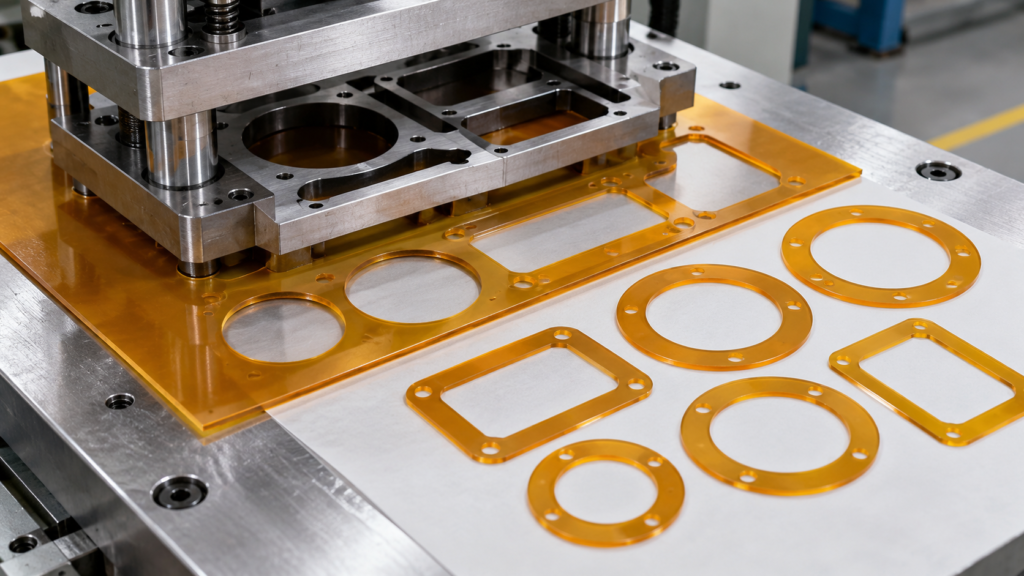
Die-Cut Polyurethane Gaskets
Die-cut polyurethane gaskets are an established manufacturing route for flat profiles made from selected PU sheet material. This route may suit parts with defined outside contours, holes or internal openings when the final assembly does not require a raised lip, variable cross-section or other three-dimensional molded feature
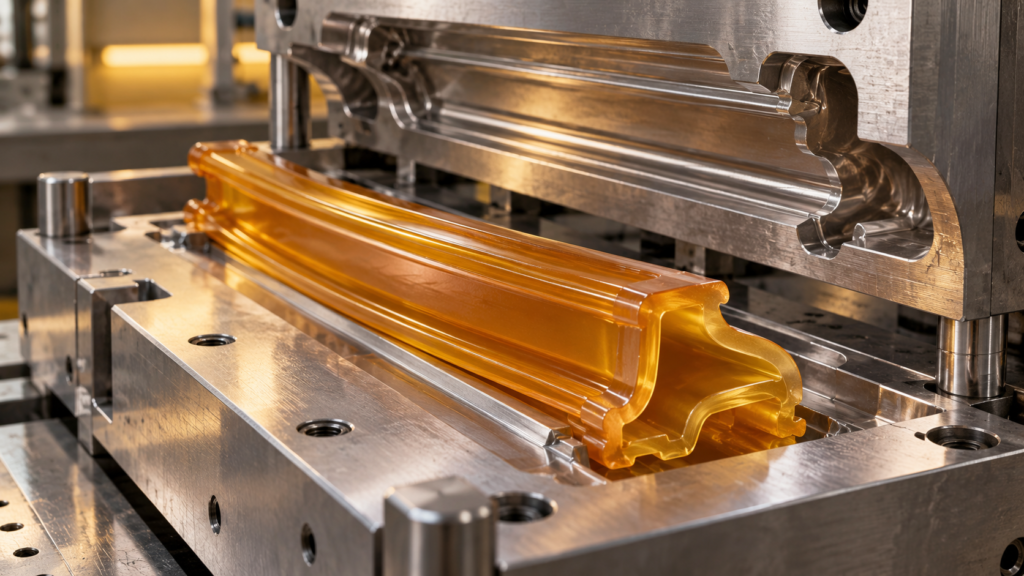
Molded Polyurethane Gaskets
Molded polyurethane gaskets are an established manufacturing route for parts that require a shaped cross-section, variable thickness, a three-dimensional contact surface or a complex formed profile. The geometry should be determined by the real assembly requirements, particularly where a flat-sheet part cannot provide the needed fit or functional contact
Custom Polyurethane Gaskets for Wear Paths and Compression Fit
Custom polyurethane gasket development is not limited to changing length, width or outside shape. The design must reflect how the PU part works inside the customer’s equipment: whether it carries load, experiences wear, absorbs impact, compresses across a gap or protects a vulnerable contact edge.
The key question is not only “Will the gasket fit?” It is also “Will the selected PU structure, hardness and geometry keep performing at the real contact path after assembly and repeated service?
| Customization Area | PU-Specific Review | Why It Matters |
|---|---|---|
| Material structure | Solid polyurethane or polyurethane foam gasket | Separates wear/load needs from cushioning/gap-compensation needs |
| Hardness | Matched to contact force, deflection and support requirement | Helps avoid a profile that is too soft or too rigid |
| Thickness and section | Reviewed against gap, compression space and movement clearance | Helps maintain fit without overloading the assembly |
| Edge and opening geometry | Corners, holes, narrow bridges and transitions reviewed | Helps reduce local tearing or distortion risk |
| Contact path | Wear zone, impact point and loaded area identified | Keeps material where the assembly needs functional support |
| Manufacturing route | Die-cut or molded route reviewed against final geometry | Matches the process to flat or three-dimensional features |
| Size and color | Reviewed as identification and assembly requirements | Helps match the approved part to the application requirement |
PU-Specific Sample Development Logic
For a polyurethane gasket, the first sample should confirm more than overall dimensions. It should help verify whether the selected material structure works at the actual contact path: solid PU for a denser wear- or load-focused profile, or PU foam for controlled compression and gap accommodation.
Where a sample mold or prototype route is appropriate, the development sequence is:
- Review the wear, impact, compression or cushioning function in the real assembly.
- Confirm the PU structure, hardness direction, geometry and manufacturing route.
- Produce a sample for fit and functional evaluation.
- Proceed to mass-production tooling only after the sample and assembly direction are confirmed.
What to Share for a Custom PU Gasket Review
- Drawing, sample or dimensions of the actual interface
- Whether the part faces wear, impact, compression, cushioning or a combination
- Available gap, contact area and movement clearance
- Required thickness, key openings, corners or narrow sections
- Contact media, temperature and exposure conditions
- Whether the requirement is for solid PU or polyurethane foam gasket behavior
- Any color or part-identification requirement
Where Are Polyurethane Gaskets Used?
The applications below are engineering-use scenarios, not keyword-table application terms. Polyurethane gasket selection should always be based on the actual contact path, load, movement, media, temperature and required function. The same PU material is not automatically suitable for every environment
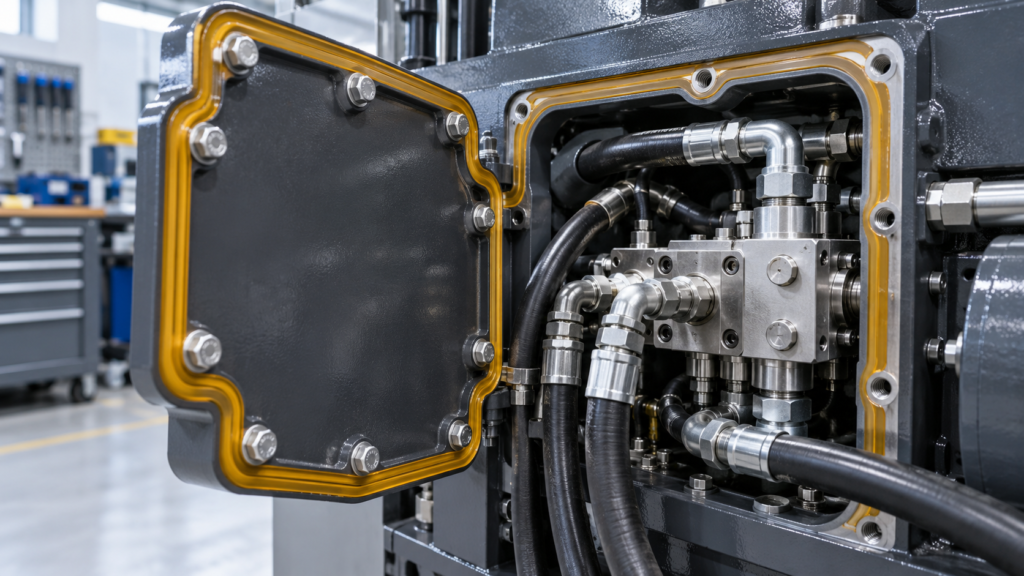
Hydraulic and Fluid Power Equipment
Polyurethane gaskets can be considered for hydraulic equipment interfaces where the part must tolerate repeated mechanical loading, edge contact or extrusion-related stress. The selection should not be based on the word “hydraulic” alone. Actual fluid compatibility, pressure, temperature, movement, compression space and the required sealing function must be reviewed before selecting a PU compound or geometry

Mining and Heavy Equipment
Mining and heavy equipment can expose gasket interfaces to impact, abrasive contamination, vibration and high local loading. Polyurethane may be considered where a component must retain functional geometry around a cover, guard, guide or contact edge under these conditions. The design should account for the real wear path, mounting support, access for replacement and any exposure that could affect the material

Material Handling and Conveying Equipment
Conveying and material-handling equipment often includes recurring contact, vibration and abrasion near guides, panels or protective interfaces. A polyurethane gasket can be considered when the part needs to maintain a defined profile while adjacent components move or carry material. Review the direction of contact, surface speed, particle exposure, contact pressure and whether the part is sealing, cushioning or protecting an edge

Industrial Automation and Positioning Systems
Automation equipment may require gasket or cushioning components around moving guards, locating features, access panels and repeated-contact mechanisms. Polyurethane can be considered when the assembly needs durable positional fit without relying on a fragile edge or a soft material that loses shape too quickly. Selection should account for cycle frequency, actuator movement, panel stiffness and the amount of available compression

Automotive and Transport Equipment
Automotive and transport equipment can involve vibration, recurring load, impact and confined interface geometry. Polyurethane gaskets may be considered for selected equipment covers, support interfaces or protective contact points where a durable mechanical profile is required. The final design should review the specific vehicle environment, temperature, fluid contact, movement and any regulatory or OEM material requirement

Industrial Covers, Guards and Access Panel
Equipment covers, guards and access panels can have corners, fasteners and irregular contact zones that concentrate force at the gasket edge. A polyurethane gasket can be developed to follow the functional contact path and support the interface around these features. The required result may be wear protection, controlled contact, cushioning or a combination, depending on the equipment design

PU Foam Gaskets for Equipment Enclosures
PU foam gaskets can be considered for enclosure doors, panels and covers that require controlled compression, cushioning or gap compensation. They are particularly relevant where thin panels or uneven mating surfaces should not be forced together with excessive tightening. The foam structure, compression recovery, enclosure environment and required protection level should be assessed before defining the final gasket design
When PU Is Not the First Material to Review
A polyurethane gasket is most relevant when mechanical wear is the main source of failure. It is often considered for repeated contact, abrasion, impact, load-bearing fit and vulnerable edges around holes or narrow sections.
However, not every gasket problem is caused by mechanical contact. When the dominant risk comes from fluid exposure or environmental exposure, another material may be a more suitable starting point
When Fluid Exposure Is the Main Risk: Review NBR First
If the gasket will regularly contact lubricating oil, hydraulic fluid, fuel or other oil-based media, fluid compatibility should be reviewed before wear resistance. In this situation, an NBR gasket may be a more appropriate material to assess first.
A polyurethane gasket can be valuable in a mechanically demanding assembly, but material selection should not rely on abrasion resistance alone when oil or fuel exposure is the main reason the existing gasket fails
When Weather, Water or Steam Is the Main Risk: Review EPDM First
If the gasket is primarily exposed to outdoor weathering, ozone, water, hot water or steam, environmental resistance should guide the material decision. In this situation, an EPDM gasket may be the more appropriate material to assess first.
The question is not whether PU is a durable material in general. The question is whether mechanical wear or environmental exposure is the dominant risk in the actual assembly
If you need more choice, you can check our raw material guide, so that you can make a good decision.
Verify a PU Gasket for Wear, Load and Actual Assembly Fit
For a polyurethane gasket, dimensional inspection alone is not enough. A part may match the drawing but still underperform if its hardness, edge geometry, compression behavior or contact path does not match the real assembly.
The verification focus should reflect why PU was selected: to manage mechanical contact, abrasion, impact, repeated loading or edge vulnerability
| Verification Focus | What to Review | Why It Matters for a PU Gasket |
|---|---|---|
| Hardness and material feel | Confirm the agreed hardness range and material structure | Hardness affects support, deflection, contact force and wear behavior. |
| Critical fit dimensions | Check thickness, opening size, profile section and locating features | Small dimensional changes can alter compression, clearance and interface contact. |
| Holes, corners and narrow bridges | Inspect vulnerable geometry for clean edges, tearing risk and distortion | These locations may face concentrated stress during installation and use. |
| Actual contact path | Install the sample in the mating assembly where possible | The real contact surface can reveal rubbing, pinching, misalignment or over-compression. |
| Repeated-use condition | Review the part after representative opening, closing, loading or sliding cycles | This helps identify whether the gasket maintains its required shape and function. |
| PU foam compression behavior | For PU foam gasket designs, assess recovery after the intended compression condition | Foam structure must suit the gap variation and required contact pressure. |
Sample Validation Should Reproduce the Real Failure Risk
If the original gasket wears, tears or deforms during use, the sample review should reproduce that condition as closely as practical. For example, install the PU gasket in the actual cover, guide, panel or moving interface and inspect the locations that repeatedly rub, bend or carry force.
This approach gives the buyer more useful feedback than approving the gasket only by appearance or loose-part dimensions
What to Confirm Before Production Approval
Before approving a production version, confirm that the polyurethane gasket fits the mating part without excessive force, remains positioned during assembly, does not pinch at corners or openings, and performs as expected along the intended contact path.
Where a custom sample is approved in the actual assembly, it provides a clearer basis for moving forward with the final production version
Polyurethane Gasket FAQs
Yes. A physical sample can be used as a starting reference when a drawing is unavailable. The sample should be reviewed together with its installed position, mating part and known failure issue. This helps distinguish which dimensions must be retained and which areas should be adjusted for wear, compression or assembly fi
No. Color should not be used as the basis for judging polyurethane gasket hardness or performance. Hardness, material structure and application suitability should be confirmed separately. If a customer needs a specific color for identification, assembly control or product appearance, the color requirement should be evaluated together with the intended material performanc
Multiple openings, narrow bridges and sharp internal corners should be reviewed as stress-sensitive areas. Their shape, edge radius, thickness and location can affect installation behavior and resistance to tearing. A polyurethane gasket design should consider the mating fasteners, panel alignment and force applied near each opening rather than treating all holes as identica
Assembly sampling is especially valuable when the gasket must stay located during installation, fit around several openings, contact a moving component or compress against an uneven surface. A loose part may look correct but still pinch, shift or rub after installation. Reviewing the gasket in the actual mating assembly provides more meaningful approval feedback
Yes, where different areas have different functions. A solid polyurethane gasket may be considered for a wear-facing or load-bearing location, while a PU foam gasket may be considered for a lower-force enclosure gap. The structures should not be treated as interchangeable; each area should be designed around its contact force, gap variation and service conditio
Store polyurethane gaskets in a clean, dry location away from direct sunlight, excessive heat, ozone-generating equipment and unnecessary distortion. Avoid stacking heavy items on thin profiles or foam structures for extended periods. For long storage or critical applications, confirm the packaging and storage condition with the supplier before installation
MOQ 500 pcs, Accept Customization for Small Order. Design Products as Your Idea.
Related Products
Package Method




"Take The Efficient Booster For Your Business Now "

Alan Chen
Product Sales Manager & Rubber Specialist at RISEUP
