
Neoprene Rubber Tube
Custom Neoprene Tubes for Weather, Abrasion & Industrial Applications
We Have Worked With Numerous Clients, And Our Rubber Products Have Enabled Them To Establish Their Brands And Broaden Their Market Presence


What Is Neoprene Rubber Tube?
Neoprene rubber tube is also known as chloroprene rubber tube or CR rubber tube. Neoprene is a synthetic elastomer based on chloroprene polymer, offering balanced resistance to weather, abrasion, chemicals, and flame.
Key Features of Neoprene Rubber Tubes
This is six key function of neoprene tube, you can know more about our rubber tube

Excellent Weather Resistance
Standard NBR (Nitrile) tubing quickly develops catastrophic outer-wall micro-cracks under UV light, leading to dangerous fluid leaks or exposed internal wiring. Extruded Neoprene tubing is inherently formulated to resist ozone degradation. It maintains its outer jacket integrity many years of sun exposure, making it the ultimate weather-proof routing solution for outdoor fluid transfer and exposed marine cable harnesses.

Good Abrasion Resistance
Industrial tubing is constantly dragged across abrasive factory floors, routed through sharp metal bulkheads, or bundled in high-vibration engine bays. Our custom extrusion process maximizes Neoprene’s inherent tear strength, ensuring the tube wall thickness remains uncompromised against constant external chafing. This prevents premature wall thinning and catastrophic ruptures in dynamic mechanical applications.

Flame Resistance
Different from standard elastomers that fuel a fire, our custom-compounded Neoprene tubing is intrinsically flame-resistant due to the chlorine atoms attached to its polymer backbone. When the flame source is removed, the tube self-extinguishes, allowing us to meet strict UL 94 V-0 and mass transit fire safety standards.

Balanced Oil Resistance
For industrial tubing, “balanced” means surviving in complex, dual-threat environments where standard hoses fail. While EPDM tubing degrades instantly upon oil contact, and NBR is too costly and stiff for non-fuel applications,
When routing compressed air containing atomized lubricating oils, or industrial cooling water contaminated with hydraulic fluids, the Neoprene inner wall firmly resists volume swell. This prevents the tube’s lumen (inner cavity) from swelling shut, ensuring zero flow restriction and eliminating dangerous pressure drops in your pneumatic systems.
In active engine bays or automated machining centers, the tube’s exterior is constantly subjected to incidental machine oil and grease splashes. Neoprene naturally repels these hydrocarbons, preventing the outer jacket from softening, degrading, or losing its mechanical grip on barbed fittings under high operational pressure.

Wide Temperature Performance
Engineered to maintain flexibility in freezing environments while resisting heat degradation. Our customized CR tubing maintains structural integrity across a demanding temperature spectrum from -40°C to +120°C (-40°F to +248°F).

Flexible & Durable
Where standard plastic or rubber tubes develop micro-cracks under continuous movement, Neoprene thrives. Its robust polymer matrix provides exceptional resistance to dynamic flex fatigue, ensuring millions of bending cycles without structural failure. This makes it the undisputed choice for robotic cable tracks, pneumatic automation, and high-vibration engine bays
Provided Types of Neoprene Rubber Tube By RISEUP
We can produce different kind of neoprene tube, based on your different industry ,we can provide best solution for you, you can find the interesting products in below information

Solid Neoprene Tube
Designed for: High-Pressure Fluid Routing & Structural Integrity
Manufactured with strict ID/OD dimensional tolerances, our neoprene tubing provides maximum tensile strength and tear resistance. This configuration is engineered to withstand severe external abrasion, resist internal volume swell from lubricating oils, and maintain constant flow rates in heavy-duty pneumatic, hydraulic return, and marine cooling applications.

Neoprene Foam Tube
Designed for: Thermal Insulation & Vibration Damping
We using advanced closed-cell expansion technology, our Neoprene foam tubing traps inert gas within its micro-cellular structure. This creates an exceptional thermal barrier and acoustic dampener. Inherently resistant to moisture, ozone, and HVAC compressor oils, it is the premier choice for preventing condensation on commercial refrigeration lines, insulating sub-zero coolant pipes, and isolating high-frequency vibrations in automated machinery.

Neoprene Tube Insulation
Designed for: Thermal Efficiency & Condensation Control (HVAC/R)
Purpose-built for the HVAC and commercial refrigeration industries, our Neoprene Tube Insulation acts as an absolute moisture vapor barrier. Standard open-cell materials absorb ambient moisture, destroying their thermal (K-value) efficiency. Our closed-cell extrusion specifically prevents catastrophic condensation (sweating) on chilled water lines and refrigerant pipes. With superior UV and weathering resistance, it delivers decades of reliable thermal performance on exposed rooftop AC units and sub-zero cooling systems.

Neoprene Tube Sleeve
Designed for: Cable Harness Protection & Flame Retardancy
Engineered with a highly flexible, precision thin-wall profile, our Neoprene sleeving is designed to easily slide over complex wire harnesses, braided cables, or existing hoses. It acts as a rugged, weather-proof protective skin. Compounded for superior FST (Flame, Smoke, and Toxicity) performance, it offers UL 94 V-0 self-extinguishing capabilities, making it the ultimate protective jacket for mass transit electrical routing and high-voltage control panels.
Neoprene Tube Specifications
| Property | Typical Value |
|---|---|
| Material | Neoprene Rubber (CR / Chloroprene Rubber) |
| Hardness | 40–90 Shore A |
| Density | 1.15–1.50 g/cm³ |
| Tensile Strength | 8–20 MPa |
| Elongation at Break | 150–500% |
| Tear Strength | 15–50 kN/m |
| Compression Set | ≤35% (70°C ×22h) |
| Working Temperature | -40°C to +120°C |
| Color | Black / Customized |
| Structure | Solid / Foam / Sponge/Sleeve |
Applications of Neoprene Rubber Tubes
Generic “multipurpose” hoses are liabilities in extreme environments. Our custom-extruded Neoprene tubing is specifically compounded to solve complex engineering bottlenecks across high-stakes industries where failure is not an option

🚄 Mass Transit & Railway Systems
The Engineering Hurdle: Passenger safety requires strict adherence to FST (Flame, Smoke, and Toxicity) standards. Standard rubber acts as fuel during a fire.
The Neoprene Solution: Formulated for inherent flame retardancy, our CR tubing provides self-extinguishing wire sheathing, pneumatic door seals, and HVAC drainage lines that safely meet critical mass transit fire safety regulations.

🤖 Robotics & Dynamic Automation
The Engineering Hurdle: Pneumatic and fluid lines inside robotic cable tracks undergo hundreds of thousands of bending cycles, causing standard plastics and rubbers to develop fatigue micro-cracks.
The Neoprene Solution: Leveraging its exceptional dynamic flex fatigue resistance, our customized Neoprene tubing ensures uninterrupted fluid transfer in high-vibration machinery and continuous-motion robotic arms, drastically reducing maintenance downtime.

⚓ Marine & Offshore Engineering
The Engineering Hurdle: Deck equipment and engine bays are subjected to a brutal combination of saltwater corrosion, intense UV radiation, and continuous lubricating oil splashes.
The Neoprene Solution: As the ultimate balanced elastomer, Neoprene resists saltwater and ozone degradation while simultaneously repelling engine oil. It is the definitive material for marine engine cooling lines and offshore hydraulic protection sleeves.

Electrical Protection & Cable Jacketing
The Engineering Hurdle: High-voltage industrial control panels and outdoor transformers require wire routing that can withstand sharp metal chassis abrasion, severe weather, and above all, strict fire safety regulations. Standard PVC sleeves melt, and generic rubber acts as a fuel source during electrical shorts.
The Neoprene Solution: Serving as a highly resilient outer jacket, our extruded Neoprene tubing offers exceptional mechanical toughness to prevent wire chafing. Crucially, its inherent, UL 94-rated flame retardancy ensures that in the event of an electrical short, the tubing will self-extinguish, preventing fire propagation along the cable harness.

(HVAC & Commercial Refrigeration
The Engineering Hurdle: Rooftop AC units and commercial refrigeration systems expose tubing to a brutal mix of extreme outdoor UV/ozone, fluctuating condensate temperatures, and inevitable exposure to compressor lubricating oils. Standard PVC drain lines become brittle and crack in the cold, while EPDM degrades from compressor oil carryover.
The Neoprene Solution: Neoprene is the definitive “all-weather, mixed-media” conduit. It remains flexible in freezing temperatures while easily handling hot condensate. Its superior ozone resistance survives decades on sun-baked rooftops, and its balanced oil resistance prevents degradation when exposed to traces of HVAC compressor oils and refrigerants.
Custom Neoprene Tube Manufacturing
Standard catalogs sell generic rubber. As a true direct manufacturer, we don’t just extrude shape—we engineer the polymer chemistry. Neoprene (Polychloroprene) is a complex elastomer that requires precise formulation control to achieve its renowned balance of properties.
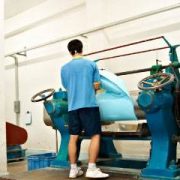
Grade-Specific Internal Mixing: We don’t rely on pre-mixed generic compounds. We utilize heavy-duty internal Banbury mixers to process specific raw CR polymer grades in-house. We can mass-produce sulfur-modified G-types for dynamic belting/flex applications, or shear-mix mercaptan-modified W-types for static seals requiring ultra-low compression set.
Precision Metallic Oxide Dosing: Standard rubbers cure with sulfur. Neoprene requires metallic oxides, which are notoriously difficult to disperse evenly. Our automated dosing systems precision-weigh and blend Zinc Oxide (ZnO) and Magnesium Oxide (MgO) at the exact ratios needed. This precise manufacturing step guarantees uniform cross-linking density throughout the tube wall, ensuring consistent burst pressure ratings batch after batch.
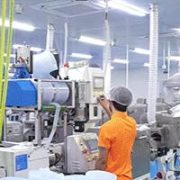
High-Shear Dispersion for FST Optimization: To achieve strict UL 94 V-0 flame retardancy without making the tube brittle, we use high-shear twin-screw extruders to uniformly disperse Alumina Trihydrate (ATH) powders directly into the Neoprene matrix. This manufacturing capability allows us to produce highly flexible, flame-retardant sleeves that pass Low-Smoke/Zero-Halogen (LSZH) equivalent testing for mass transit.
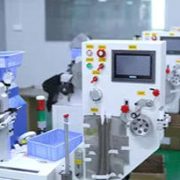
Cross-Head Over-Extrusion (Jacketing) Lines: Beyond extruding standard standalone tubing, we operate specialized cross-head extrusion lines. This specific machinery allows us to continuously feed your existing wire harnesses, braided cables, or flexible metal conduits directly through the die, extruding a seamless, perfectly bonded Neoprene protective jacket over the substrate in a single, high-speed pass.
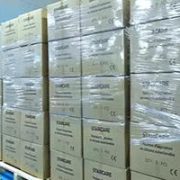
Neoprene Tubes Production Process





FAQ
Yes. We manufacture custom neoprene rubber tubes according to customer specifications, including inner diameter, outer diameter, wall thickness, length, hardness, color, and material formulation. Custom extrusion allows us to produce neoprene tubes for different industrial and OEM applications.
Neoprene tubes can be customized in various sizes based on application requirements. We provide different inner diameters, outer diameters, wall thicknesses, and cut lengths. Custom tooling and extrusion solutions are available for special dimensions and large-volume production.
Yes. Neoprene tubes are suitable for many outdoor applications due to their good resistance to weathering, ozone, UV exposure, and environmental conditions. They are commonly used for outdoor equipment protection, cable protection, automotive components, and industrial applications.
Neoprene provides good resistance to many chemicals, including mild acids, alkalis, ozone, and industrial fluids. However, chemical compatibility depends on concentration, temperature, and exposure time. For highly aggressive chemicals, material testing is recommended before production.
Our MOQ depends on tube size, material formulation, tooling requirements, and production volume. Standard neoprene tube sizes may have lower minimum quantities, while customized extruded tubes typically require evaluation based on tooling and production requirements.
Yes. As a responsible global manufacturer, all of our extruded Polychloroprene compounds are fully compliant with the latest RoHS directives and REACH regulations, completely free from Substances of Very High Concern (SVHCs).
Related Products
"Take The Efficient Booster For Your Business Now "

Alan Chen
Product Sales Manager & Rubber Specialist at RISEUP
