
Custom Polyurethane Tubing for OEM and Industrial Applications
We helps OEM buyers review custom polyurethane tubing around the required dimensions, material, hardness, routing conditions and assembly method
Custom polyurethane tubing reviewed around the actual application
Material and hardness selection subject to engineering confirmation
Polyurethane pneumatic tubing for compact air-line routing
Sample and assembly review before production release
What Is Polyurethane Tubing?
Polyurethane tubing is a flexible thermoplastic tube used for pneumatic circuits, instrumentation, equipment routing and selected fluid applications. Buyers may also called polyurethane tube, polyurethane tubes, PU tubing, PUR tubing or urethane tubing. These terms can describe related products, but they should not replace a review of the actual dimensions, compound, hardness and operating conditions.
The correct selection depends on more than the material name. we should review the required outside diameter, inside diameter, wall thickness, tolerance, temperature, pressure, medium, bend radius, movement and connection method before confirming a production route
Define the Application Before Choosing the Tube
For an accurate quotation, provide the intended medium, operating temperature, pressure, installation environment, required polyurethane tubing sizes, fitting type and expected movement. If the application includes vibration, repeated flexing, abrasion or exposure to cleaning agents, include those conditions in the initial specification

Why Consider Polyurethane Tubing for OEM Routing?
Polyurethane tubing may be considered when an OEM assembly requires flexible routing, controlled handling and a compact installation layout. Depending on the formulation, hardness and wall geometry, the material can provide a useful balance of flexibility, kink resistance and abrasion behavior for selected pneumatic applications.
For pneumatic polyurethane tubing, the material decision should be linked to pressure, temperature, fitting design and movement. Polyurethane air tubing may be appropriate for certain compressed-air circuits, but a dry-air application does not automatically qualify the same construction for water, oil, fuel or chemical service.
Buyers looking for wear resistant tubing should describe the actual contact condition. Compound, hardness, wall thickness and routing support should be reviewed together.
A qualified polyurethane tubing manufacturer or polyurethane tubing supplier should receive the operating conditions before recommending a construction. For air line tubing, review insertion force, retention, leakage, cutting quality and dimensional consistency after installation

We Provide Polyurethane Tubing Types For Your Products Application
We provides polyurethane tubing options for OEM equipment, pneumatic assemblies and industrial routing requirements. The final construction should be selected according to the required dimensions, material behavior, operating environment and assembly method
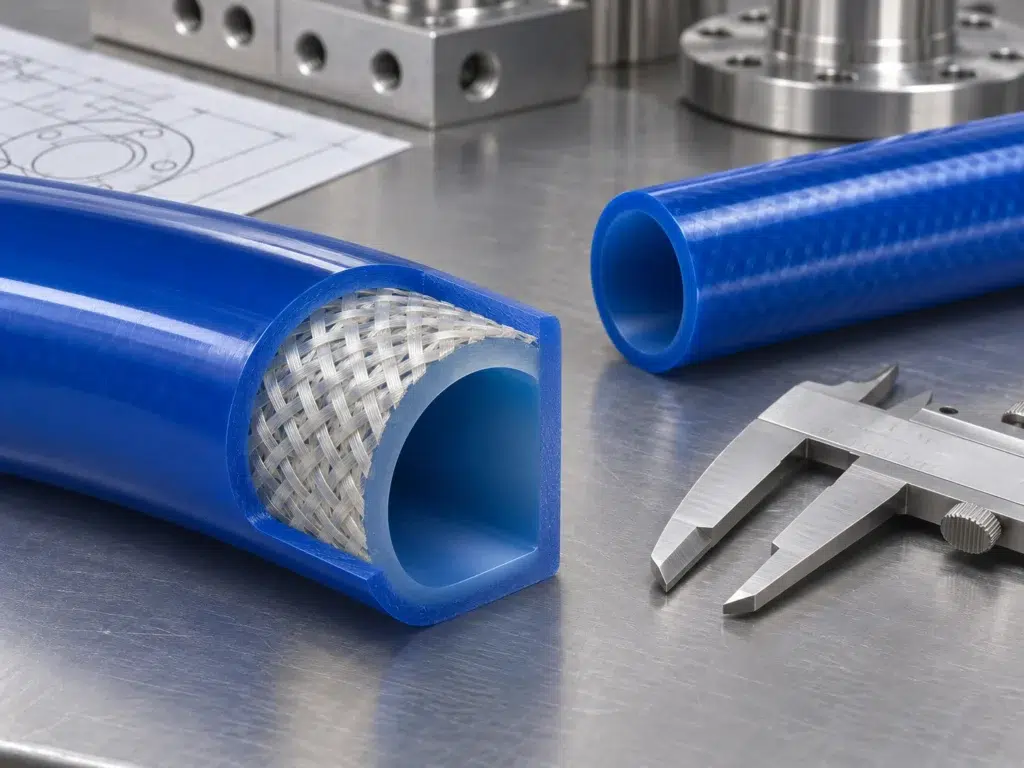
Reinforced Polyurethane Tubing
Reinforced polyurethane tubing includes an additional structural layer or reinforcement for applications that require greater dimensional stability or mechanical support. Reinforcement can affect flexibility, wall construction, bend radius and connection design
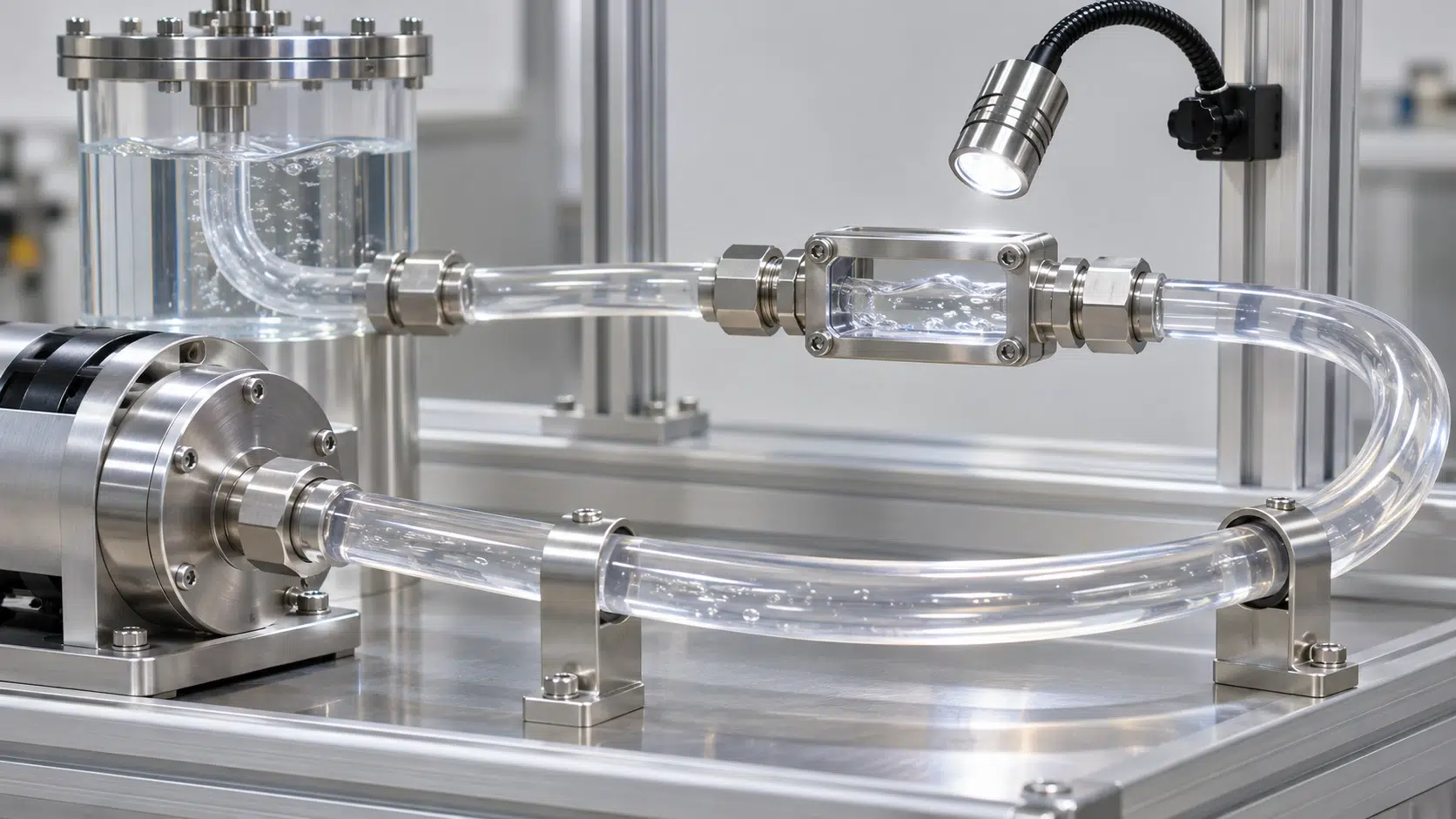
Clear Polyurethane Tubing
Clear polyurethane tubing may be selected when the buyer needs visual observation of the line contents, flow condition or possible contamination. The required clarity, wall thickness, color stability, operating medium and cleaning conditions should be confirmed
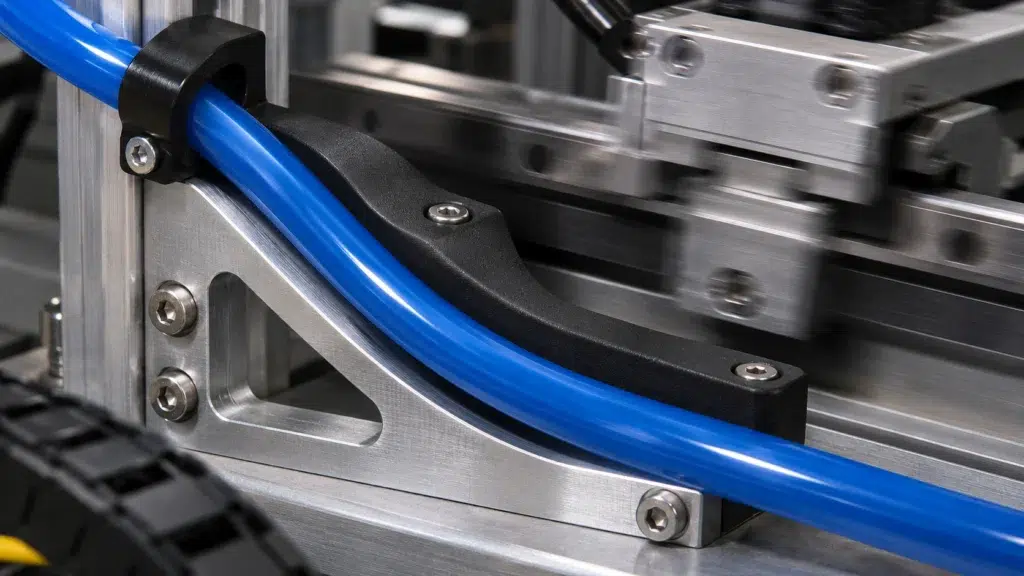
Abrasion Resistant Tubing
Abrasion resistant tubing may be considered when the tube contacts brackets, guides, machine surfaces or moving components. The actual contact pressure, movement frequency, surface roughness and bend condition should be provided
Develop Polyurethane Tubing Around Hardness, Compound and Motion
Custom polyurethane tubing should be developed around the material behavior required by the assembly. Hardness, compound family, wall geometry and movement condition can change how the tubing bends, recovers, grips a fitting and responds to moisture or repeated contact.
For an OEM project, you should ask your rubber parts supplier to review whether the application requires:
- a softer construction for tight routing
- a firmer construction for dimensional stability
- repeated flexing with controlled recovery
- contact resistance against guides or brackets
- visual inspection through clear material
- ether-based or ester-based polyurethane subject to media review
- single-wall or reinforced polyurethane tubing
- a defined fitting insertion and retention behavior
Compound Selection Must Follow the Medium
Ether-based and ester-based polyurethane should not be treated as interchangeable material labels. Depending on the formulation and application, they may respond differently to moisture, hydrolysis, oils, fuels, cleaning agents and other media.
A rubber tubing supplier should receive the actual medium, concentration, temperature and exposure duration before recommending a compound. A material that performs well in dry pneumatic service may require a different review for water, humid environments or chemical contact.
Hardness and Motion Affect Installation Behavior
Hardness can influence flexibility, kink resistance, fitting insertion, retention and dimensional recovery. Repeated bending or movement may also expose weaknesses that are not visible during a static fit check.
For this reason, custom polyurethane tubing should be evaluated in the intended routing condition. The sample review should consider bend radius, movement frequency, support spacing, fitting retention and any rubbing against nearby components
Polyurethane-Specific Validation
The validation plan should address the failure modes relevant to polyurethane tubing:
- cracking or embrittlement after moisture exposure
- kinking during installation
- loss of retention at the fitting
- surface wear caused by repeated contact
- dimensional change after storage or coiling
- leakage after repeated flexing
- loss of visual clarity where inspection is required
Polyurethane Tubing Extrusion and Die Control
The quality of polyurethane tubing depends heavily on the relationship between the compound, extrusion process and forming die. During production, the die opening, material flow, cooling condition and haul-off speed can affect the tube’s bore, outside diameter, wall thickness, ovality and surface finish.
For a custom polyurethane tubing project, the tooling review should focus on:
- required inside and outside dimensions
- wall-thickness distribution
- compound hardness and flow behavior
- die design for the selected profile
- cooling stability after forming
- dimensional recovery during winding or cutting
- surface condition and visual consistency
Tooling Must Match the Polyurethane Construction
A single-wall polyurethane tube and a reinforced polyurethane tubing construction should not automatically use the same tooling approach. Reinforcement, wall thickness, hardness and profile geometry can change material flow and cooling behavior during forming.
The die and process settings should therefore be evaluated against the confirmed product construction. Tooling decisions should not be based only on a nominal diameter.
Control the Bore, Wall and Surface During Forming
For polyurethane tubing, small changes in material flow or cooling can affect the internal bore, wall thickness and ovality. These characteristics may later influence fitting insertion, retention, bending and leakage.
The inspection plan should connect dimensional checks to the actual die and process conditions. This gives the buyer a more meaningful result than a general appearance inspection
Develop the Tooling Through Sample Approval
Where a non-standard profile or dimension is required, the development route should begin with tooling review and sample production. The sample should be checked for dimensions, flexibility, surface condition and assembly behavior before production tooling is approved.
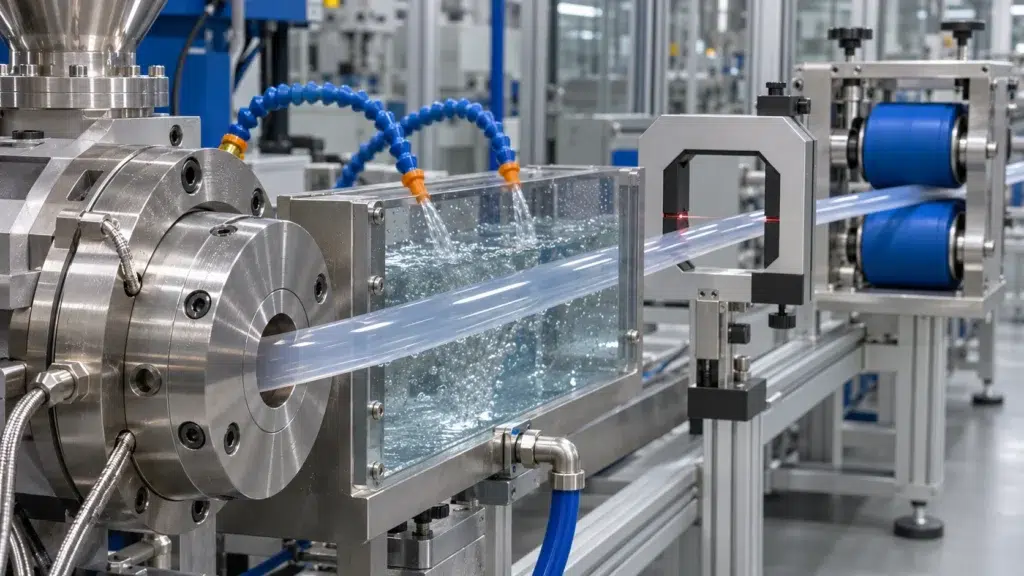
Where Polyurethane Tubing Fits In OEM Equipment
Polyurethane tubing is most useful when the application combines compact routing with repeated handling, bending or connection cycles. The product should be selected around the actual movement, medium, temperature and fitting arrangement rather than simply classified as a general-purpose tube.

Compact Pneumatic Routing
Polyurethane air tubing can be considered for compact air circuits around valves, cylinders, sensors and manifolds. The design review should cover bend radius, fitting insertion, retention, pressure and repeated movement. A flexible construction may simplify routing, but unsupported bends can still create kinking or connection stress.

Machine Air-Line Assemblies
For air line tubing installed inside OEM equipment, dimensional consistency and fitting behavior are important during repeated assembly. The tube should be checked with the intended connector and cutting method, because hardness, wall thickness and cut quality can affect insertion and leakage

Moving or Contact-Prone Routing
Where the tubing repeatedly contacts a guide, bracket or machine surface, the buyer may consider wear resistant tubing. The required construction depends on contact pressure, movement frequency, surface roughness and support spacing. These details should be reviewed before treating abrasion behavior as a confirmed performance claim.

Visual Inspection of the Flow Path
Where operators need to observe the line contents or detect contamination, clear polyurethane tubing may be considered. The application review should include required clarity, medium, temperature, cleaning conditions and expected exposure duration
How to Verify Polyurethane Tubing Before Approval
Polyurethane tubing should be evaluated under the conditions that can change its behavior after installation. A static dimensional check may not reveal problems caused by bending, fitting insertion, moisture exposure, repeated movement or contact with nearby components
Check Geometry After Forming and Storage
Measure outside diameter, inside diameter, wall thickness and ovality at defined locations. If the tubing is supplied in coils or stored under compression, check whether the dimensions recover consistently before assembly.
Geometry changes can influence fitting insertion, retention, bending and leakage. The approved measurement method and tolerance should be recorded for repeat productio
Verify Fitting Retention and Leakage
The tube should be tested with the intended fitting and installation method. Check insertion force, retention, leakage and the condition of the cut end.
Hardness, wall thickness, surface condition and fitting design can all affect the result. Testing the tube separately from the actual connector may not represent the final assembly
Evaluate Repeated Bending and Contac
If the application includes vibration, movement or contact with a guide, evaluate the tubing at the intended bend radius and movement frequency. Inspect for kinking, surface wear, cracking, loss of retention and leakage after cycling.
For wear resistant tubing, the test should reflect the actual contact surface and loading condition. A generic abrasion statement is not a substitute for application evidence
Review Media and Temperature Exposure
Polyurethane formulations can respond differently to water, humidity, oils, fuels, cleaning agents and other media. Review the actual medium, concentration, temperature and exposure duration before approving the construction.
Where the application requires clear visibility, inspect the material after exposure for haze, discoloration or loss of visual clarit
Frequently Asked Questions About Polyurethane Tubing
Provide the medium, temperature, pressure, outside diameter, inside diameter, wall thickness, hardness, bend radius, movement condition and fitting type. These details help determine whether the selected polyurethane tubing construction is appropriate for the actual assembly
Hardness can influence flexibility, kink resistance, fitting insertion, retention and dimensional recovery. A softer construction may support tighter routing, while a firmer construction may provide greater dimensional stability. The correct choice depends on the complete installation condition
Clear polyurethane tubing may be considered when the buyer needs to observe flow or identify contamination. The required clarity, medium, temperature, cleaning method and exposure duration should be reviewed because visual appearance may change after service exposure
Reinforced polyurethane tubing may be considered when the assembly requires additional structural support or dimensional stability. Reinforcement can change flexibility, bend radius, fitting behavior and tooling requirements, so it should be evaluated as a separate construction
It may be suitable for selected dynamic applications, but the bend radius, movement frequency, support spacing, contact surface and temperature must be reviewed. Testing should include repeated cycling and inspection for kinking, wear, cracking, retention loss and leakage
Abrasion resistant tubing should be evaluated against the actual contact surface, pressure, movement frequency and support condition. A general abrasion description is not enough to confirm service life for a particular machine or routing layou
MOQ 500 pcs, Accept Customization for Small Order. Design Products as Your Idea.
Related Products
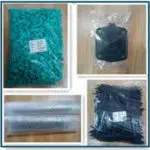
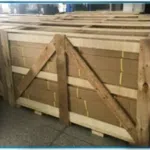
Package Method




"Take The Efficient Booster For Your Business Now "

Alan Chen
Product Sales Manager & Rubber Specialist at RISEUP
