
Custom Butyl Gaskets for Airtight and Moisture Resistant Sealing
We manufacture custom butyl rubber gaskets for static sealing applications where low permeability, moisture resistance and long-term weathering performance matter.
Low permeability for static air and moisture barriers
Custom geometry for real flange and cover interfaces
Weathering and ozone resistance for exposed static joints
Sample confirmation before mass-production tooling
What Is a Butyl Rubber Gasket?
A butyl rubber gasket is a custom sealing component made from butyl rubber, also known as IIR. It is placed between two stationary mating surfaces, such as flanges, covers, panels or enclosure frames, to reduce the passage of air, gas, moisture or vapor through the joint.
Butyl rubber is made primarily from isobutylene with a small amount of isoprene. Its key value is low permeability: compared with many general-purpose rubbers, it allows less gas and moisture transfer through the material. This makes a butyl gasket a practical option for static airtight or moisture-resistant interfaces when the compound, compression and joint design are properly matched to the application.
A butyl rubber gasket does not create a reliable seal by material choice alone. The gasket must also match the sealing gap, flange surface, compression space, required contact pressure, temperature conditions and surrounding media
How a Butyl Gasket Works
When the joint is assembled, the gasket is compressed between two surfaces. The compressed butyl material fills small surface irregularities and creates a continuous barrier across the interface. For dependable sealing, the design must prevent both under-compression, which can leave leakage paths, and over-compression, which can reduce recovery or damage the gasket edge.
Butyl Gasket Selection Factors
| Selection Factor | Why It Matters |
|---|---|
| Sealing interface | Defines whether the gasket needs to fit a flange, cover, panel, frame or irregular surface |
| Gas or moisture exposure | Helps determine whether low permeability is the main material requirement |
| Compression space | Controls gasket thickness and the usable compression range |
| Temperature range | Confirms flexibility and recovery needs during cold, heat and temperature changes |
| Outdoor exposure | Reviews weathering, ozone and ageing conditions |
| Joint movement | Butyl gaskets are generally more suitable for static or limited-movement sealing |
| Contact media | Confirms whether the actual fluid or chemical is compatible with the selected compound |
| Gasket geometry | Determines flat, full-face, ring or irregular custom shape requirements |

Why Choose Butyl Rubber for Airtight and Moisture-Resistant Sealing?
1.What Butyl Rubber Does for Airtight and Moisture-Resistant Sealing
Butyl rubber is commonly selected for static sealing applications because of its low permeability. Its molecular structure helps reduce the movement of air, gas, moisture and vapor through the gasket material.
When a butyl gasket is compressed between two stationary mating surfaces, it helps create a continuous barrier across the joint. This makes it useful for applications where the gasket must not only fill surface irregularities, but also reduce long-term transmission through the sealing material itself.
Butyl rubber can also provide useful flexibility at lower temperatures and resistance to weathering, ozone and ageing. These properties help the gasket maintain contact in exposed static interfaces, outdoor equipment covers and moisture-sensitive enclosures.
| Butyl Rubber Characteristic | Sealing Function |
|---|---|
| Low permeability | Reduces air, gas, moisture and vapor migration through the gasket |
| Moisture resistance | Supports moisture-barrier sealing at covers, panels and enclosures |
| Low-temperature flexibility | Helps maintain surface conformity during lower-temperature operation |
| Weathering and ozone resistance | Supports exposed and outdoor static sealing interfaces |
| Compression conformity | Helps fill minor flange or cover surface variation when correctly designed |

2.Why a General-Purpose Rubber Gasket May Not Be Enough
A general-purpose rubber gasket may provide basic surface contact, but it can be unsuitable when the application has a defined barrier-performance requirement.
Its limitations may include:
- The material may allow gradual air, gas, moisture or vapor transmission through the gasket body.
- The gasket may be selected only by shape and thickness, without confirming long-term barrier performance.
- The compound may not be designed for prolonged outdoor ageing or ozone exposure.
- The material may become less conformable when temperatures decrease.
- The gasket may create an acceptable initial fit but fail to meet the customer’s required leakage-control target over time.
These limitations do not mean every non-butyl rubber is inferior. They mean that a standard, non-specialized rubber gasket should not be assumed to meet a low-permeability or moisture-barrier requirement without material review.
3. When Butyl Rubber Creates Greater Value
Butyl rubber creates greater value when the customer’s sealing requirement is defined by barrier performance rather than by basic gap filling alone.
It is especially worth considering when the application needs to:
- Limit long-term air or gas loss from a static enclosure or connection.
- Reduce moisture or vapor ingress into protected equipment.
- Maintain a sealed interface in outdoor, ozone-exposed or weathering conditions.
- Retain useful gasket flexibility during lower-temperature operation.
- Reduce maintenance, resealing or replacement caused by gradual leakage or moisture entry.
- Use a custom flat, full-face or irregular gasket shape that must match a specific stationary interface.
Butyl should be evaluated as a value-based material choice when these requirements are important enough that leakage, moisture ingress or premature resealing would cost more than selecting the correct compound at the start.
Custom Butyl Gaskets for Barrier Performance and Static Sealing Fit
Custom butyl gasket development is not limited to changing the outside dimensions of a rubber part. The gasket must be designed around how the stationary joint controls air, gas, moisture or vapor transfer.
For butyl rubber, the key design question is not only “Will the gasket fit?” It is also “Will the assembled interface provide the required barrier performance after compression, temperature change and environmental exposure?”
We develop custom butyl rubber gaskets around the actual sealing interface, including the contact path, compression space, flange condition, exposure environment and required barrier function.
Butyl-Specific Customization Areas
| Customization Area | Butyl-Focused Design Consideration |
|---|---|
| Compound selection | Reviewed for low permeability, moisture exposure, weathering and the actual contact environment |
| Hardness | Selected to balance contact pressure, conformity and stable static compression |
| Thickness | Matched to the available gap and required compression range |
| Sealing width | Designed to create a sufficient barrier path across the stationary interface |
| Full-face or partial gasket coverage | Chosen according to whether the customer needs local sealing or a broad moisture/gas barrier |
| Edge and corner geometry | Reviewed to avoid leakage paths at corners, bolt areas and irregular transitions |
| Outdoor exposure | Considered for ozone, weathering and temperature-change conditions |
| Low-temperature behavior | Reviewed when the assembly must remain conformable in colder operation or storage conditions |
| Static movement limit | Confirmed because butyl gasket design is normally focused on stationary or limited-movement interfaces |
Design Around the Leakage Path
A butyl gasket should be designed around the path that air, moisture or vapor could take through the assembly.
For example, the development review may consider:
- Where the two mating surfaces begin and end
- Whether bolt holes, corners, seams or cut-outs create potential leakage paths
- Whether the gasket needs full-face coverage or only a continuous perimeter seal
- Whether flange flatness or surface variation requires greater conformity
- Whether the assembly will experience compression changes after installation
- Whether outdoor exposure or low temperatures may affect the sealing contact over time
This approach helps avoid a common problem: a gasket that matches the drawing outline but does not adequately control the actual leakage route.
Custom Butyl Gasket Development Logic
Where sample development is required, the first objective is to confirm the sealing concept in the customer’s assembly before committing to mass-production tooling.
The review process focuses on whether the butyl compound, thickness, sealing path and compression behavior work together in the real interface. Once the sample gasket is confirmed, the approved design becomes the basis for mass-production development
What to Share for a Butyl Gasket Review
To assess a custom butyl gasket, customers can share the information most relevant to barrier performance:
- A drawing, sample or dimensions of the stationary sealing interface
- The intended air, gas, moisture or vapor barrier requirement
- Gasket thickness, available compression space or flange gap
- Outdoor, ozone, low-temperature or moisture exposure conditions
- Whether the gasket is full-face, ring-shaped, perimeter-sealing or irregular in shape
- Any bolt holes, corners, seams, cut-outs or other leakage-risk features

Butyl Gasket Forms for Static Airtight Sealing
Butyl gasket form should be selected according to the sealing path, mating-surface layout and barrier area required by the assembly.
A flat gasket is not always the correct answer. Some assemblies need full-face coverage to reduce broad moisture transfer, while others only need a continuous perimeter barrier around a cover, frame or enclosure opening. Bolt holes, corners, cut-outs and internal openings also change the gasket geometry required to maintain a continuous static sea
Common Butyl Gasket Forms

Flat die-cut butyl gasket
Flat die-cut butyl gasket is selected for flat flanges, covers, panels and simple stationary interfaces. Its main sealing purpose is to creates a defined compressed barrier between two flat surface

Full-face butyl gasket
Full-face butyl gasket is selected for broad covers, equipment panels and large stationary interfaces. Its main sealing purpose is to provides barrier coverage across most or all of the mating surface
Perimeter or frame gasket
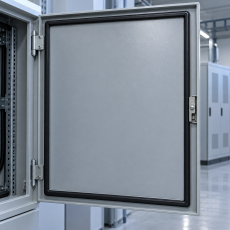
Perimeter or frame gasket is selected for enclosure doors, access panels, covers and framed openings. Its main sealing purpose is to creates a continuous seal around the outside edge of an opening

Ring or flange gasket
Ring or flange gasket is selected for circular connections, static pipe interfaces and round covers. Its main sealing purpose is to seals around a defined circular or bolt-pattern connection

Irregular-shape butyl gasket
Irregular-shape butyl gasket is selected for non-standard housings, complex covers and custom equipment interfaces. Its main sealing purpose is to follows corners, holes, cut-outs and changing edge geometry

Multi-opening butyl gasket
Multi-opening butyl gasket is selected for panels or covers with multiple holes, ports or internal openings. Its main sealing purpose is to seals several defined areas within one custom gasket part
Form Selection Boundary
These forms are intended for custom static gasket applications. Final structure selection should be confirmed against the actual joint, compression space, contact media and environmental conditions. Butyl gasket tape is not included in this product range.
Where Are Butyl Rubber Gaskets Used?
Butyl rubber gaskets are generally considered for stationary sealing interfaces where low permeability, moisture resistance, weathering resistance or low-temperature flexibility is more important than fuel and oil resistance.
The following applications are engineering-use scenarios, not keyword-table terms. Final material selection should always be based on the actual media, temperature, compression design and service conditions.

Compressed Air and Gas Equipment Sealing
For stationary covers, flanges and closures on compressed-air or gas equipment, a butyl gasket can be considered when gradual transfer through the sealing interface must be reduced. Low permeability supports the barrier objective, while the actual pressure, flange condition, compression space and permitted leakage level determine whether the gasket geometry is suitable

Moisture and Vapor Barrier Enclosures
Enclosure doors, access panels and equipment covers may need to limit moisture or vapor migration that can affect internal components. A custom butyl gasket can provide a continuous static barrier when its full-face or perimeter coverage follows the real enclosure edge, corners and fastener interruptions. The required barrier coverage should guide the final geometry

Outdoor Equipment Covers and Access Panels
Outdoor covers and access panels experience weather changes, ozone, moisture and lower-temperature conditions that can challenge a generic gasket fit. Butyl can be considered for a static interface when weathering resistance and barrier continuity are important. The design should account for compression stability, panel flatness, drainage exposure and the complete path around the opening

Construction and Weatherproof Interface Sealing
Static building-related interfaces can require a custom gasket that follows trim, access covers or protected enclosure joints without leaving moisture-entry paths. Butyl can be considered when moisture resistance, weathering performance and surface conformity matter. Corner transitions, fixings and discontinuities should be designed as part of the sealing path rather than treated as secondary details.

Water and Mild Chemical Static Sealing
For selected stationary interfaces exposed to water, mild acids or mild bases, butyl may be considered after the compound, concentration, temperature and exposure duration are reviewed. Its value is not a universal chemical-resistance claim; the benefit is a custom static barrier where the actual medium is compatible and the compression design remains stable

Low-Permeability Equipment Covers and Closures
Some equipment closures need more than a gasket that fills a visible gap: they need a defined barrier path that slows air, moisture or vapor migration over time. A custom butyl gasket can be developed as a full-face, perimeter or irregular profile, allowing coverage to follow corners, ports and openings that otherwise interrupt the sea
When to Consider an Alternative to Butyl Rubber Gasket
Butyl rubber is a strong choice for low-permeability, moisture-resistant and weather-resistant static sealing. However, it is not suitable for every operating condition.
| If Your Application Requires | Consider Instead | Why |
|---|---|---|
| Contact with petrol, fuel, oil or lubricants | NBR gasket or FKM gasket | NBR is commonly used for general oil and fuel sealing; FKM is more suitable when higher temperature or stronger chemical resistance is also required |
| Long-term steam or hot-water exposure | EPDM gasket | EPDM is commonly selected for water, steam, weathering and ozone resistance |
| Wide high- and low-temperature flexibility | Silicone gasket | Silicone is commonly selected when temperature flexibility is the primary requirement |
| High-temperature chemical or solvent exposure | FKM gasket | FKM is commonly selected for demanding chemical, solvent and elevated-temperature sealing |
| Continuous sliding, severe abrasion or repeated movement | Polyurethane gasket, natural rubber gasket or another dynamic-service elastomer | These materials may be better suited to wear and repeated dynamic movement |
How We Review Butyl Gaskets for Long-Term Airtight and Moisture-Resistant Sealing
A butyl gasket should not be reviewed only by its outside dimensions. For static barrier sealing, the key question is whether the gasket can maintain a continuous sealing path against air, gas, moisture or vapor migration after installation and environmental exposure.
The following review points help define the right butyl gasket design before production. The applicable checks should be selected according to the actual project requirement
| Verification Focus | What Is Reviewed | Why It Matters |
|---|---|---|
| Airtightness or gas-barrier requirement | The expected level of air or gas leakage control across the stationary interface | Confirms that low permeability is relevant to the project |
| Moisture and vapor barrier path | Whether the gasket covers the complete path where moisture or vapor could enter | Corners, bolt holes, seams and cut-outs can interrupt the sealing path |
| Compression fit | Gasket thickness, flange gap, contact width and available assembly compression | Insufficient or excessive compression can reduce long-term sealing stability |
| Compression recovery | Whether the gasket needs to remain in contact after installation, temperature change or long-term static loading | Helps reduce loss of contact pressure at the sealing interface |
| Weathering and ozone exposure | Outdoor, ozone, moisture and ageing conditions around the assembly | Confirms whether the environment may affect long-term static sealing performance |
| Low-temperature conformity | Expected low-temperature operation, storage or installation conditions | Helps confirm that the gasket can remain sufficiently conformable |
| Leakage-risk geometry | Corners, holes, bolts, interrupted edges and irregular transitions | Ensures the gasket outline follows the real leakage route |
| Media compatibility | Any actual contact with water, mild chemicals, cleaning fluids, oils or fuel | Prevents a low-permeability gasket from being selected for an incompatible medium |
Project-Specific Review, Not a Generic Test List
Not every custom butyl gasket requires the same verification. A simple indoor cover gasket may only need geometry and compression review. An outdoor enclosure, moisture-sensitive assembly or gas-retention interface may require a more detailed review of barrier path, weathering exposure, temperature conditions and long-term contact stability.
The purpose is to confirm that the butyl gasket design matches the actual leakage risk in the customer’s assembly.
Information That Supports the Review
For a more accurate butyl gasket review, customers can provide:
- Drawing, sample or dimensions of the mating surfaces
- Required air, gas, moisture or vapor barrier function
- Gasket thickness, flange gap and expected compression
- Outdoor, ozone, moisture, low-temperature or ageing conditions
- Locations of bolts, corners, seams, ports and cut-outs
- Any contact with water, cleaning fluid, mild chemicals, oil or fuel

Frequently Asked Questions About Butyl Rubber Gaskets
Choose full-face coverage when the broad mating surface itself needs to act as a moisture or vapor barrier. Choose a perimeter profile when the main risk is ingress around an enclosure edge or cover opening. The decision should follow the actual path that must be blocked, the available compression area and whether internal openings also require sealin
Check for flatness variation, scratches, seams, coatings, corrosion and local steps that could interrupt contact. A butyl gasket can conform to minor surface variation when correctly compressed, but it should not be expected to compensate for severe distortion. Sharing photos or a sample of the mating surface helps identify whether the profile or sealing width needs adjustment
Yes. Bolt holes, fastener spacing and tightening sequence can change local compression and create leakage-prone zones. For a barrier-focused butyl gasket, the geometry should preserve enough sealing width around each bolt area and avoid narrow bridges that can distort during assembly. These details are especially important on large covers and perimeter seals
A multi-opening butyl gasket can seal several ports or windows in one part when the material between openings has enough width and the assembly compresses each area consistently. Combining openings can simplify alignment and handling, but it should be reviewed against the panel stiffness, fastener layout and the risk of uneven compression between the individual sealing path
A sample is especially useful when the flange is not perfectly flat, the cover flexes during fastening, the compression space is uncertain or the assembly includes several corners and interruptions. It lets the customer confirm fit, installation behavior and the intended barrier path in the real equipment before a final production-tooling decision is made
Use an installation sequence that brings the stationary surfaces together evenly, avoids dragging the gasket across sharp edges and controls fastener tightening consistently. The gasket profile should also provide adequate material around corners, holes and narrow bridges. If the joint is difficult to assemble, review the geometry rather than relying on force to make the part fit
MOQ 500 pcs, Accept Customization for Small Order. Design Products as Your Idea.
Related Products
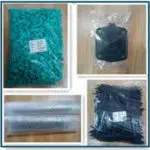
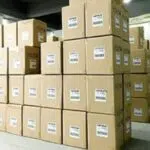
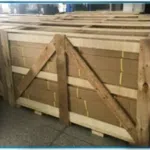
Package Method



"Take The Efficient Booster For Your Business Now "

Alan Chen
Product Sales Manager & Rubber Specialist at RISEUP
