
NBR Rubber Tube Manufacturer In China
Custom NBR rubber tubes solution withexcellent oil resistance, fuel compatibility, and mechanical durability for automotive, hydraulic, and industrial systems
Our NBR Tube Brand Customer
We provide nbr tube for our worldwide customers, a selection of our partners is listed below:


What Is NBR Rubber Tube?
NBR rubber tube, also known as nitrile rubber tube or Buna N tubing, is a flexible buna tube made from acrylonitrile butadiene rubber (NBR). It is widely used in industrial applications where resistance to oils, fuels, lubricants, and hydraulic fluids is required
The primary advantage of nitrile tubing is its excellent resistance to oil and fuel. It maintains sealing performance and mechanical strength when exposed to:
- Mineral oils
- Hydraulic fluids
- Lubricants
- Diesel fuel
- Petroleum-based chemicals
NBR tubes can be manufactured in different formulations and structures according to application requirements. By adjusting rubber compounds, hardness, and reinforcement methods, manufacturers can produce tubing with different levels of:
- Oil resistance
- Flexibility
- Tensile strength
- Wear resistance
- Temperature performance
NBR Tube Material Specifications
| Item | Specification |
|---|---|
| Material | Nitrile Rubber (NBR / Buna-N) |
| Polymer Type | Acrylonitrile Butadiene Rubber |
| Acrylonitrile Content | 18% – 50% (customizable) |
| Curing System | Sulfur cured / Peroxide cured |
| Color | Black, red, blue, green, custom colors |
NBR Tube Physical Properties
| Property | Typical Range |
|---|---|
| Hardness | 40-90 Shore A |
| Tensile Strength | 8-20 MPa |
| Elongation at Break | 150%-500% |
| Compression Set | ≤25%-40% |
| Tear Strength | 10-40 kN/m |
| Specific Gravity | 1.0-1.3 g/cm³ |
Chemical Resistance
| Medium | Performance |
|---|---|
| Mineral Oil | Excellent |
| Hydraulic Oil | Excellent |
| Lubricants | Excellent |
| Diesel Fuel | Good |
| Gasoline | Good |
| Water | Moderate |
| Steam | Limited |
Types of NBR Tubes By RISEUP
We provide the different type of NBR tube products for you, you can choose the interesting design in the listed below :

Solid NBR Tubing (Fluid & Oil Transfer)
The Problem It Solves: Standard rubber degrades instantly when exposed to hydrocarbons.
Our Solution: Highly concentrated nitrile formulations designed strictly for fluid conveyance. These tubes handle gasoline, diesel, lubricating oils, and hydraulic fluids without swelling or losing tensile strength. Perfect for automotive fuel lines, industrial machinery, and oilfield applications.

NBR Foam Tube
The Problem It Solves: Condensation, energy loss, and freezing in HVAC/R and plumbing lines.
Our Solution: A highly flexible, closed-cell nitrile insulation tube. Featuring an incredibly low thermal conductivity (λ-value) and high water vapor diffusion resistance (μ-value), it prevents sweating on cold water pipes and minimizes heat loss on hot water systems up to +105°C (+221°F).

Pre-Slit Self-Sealing NBR Tubes (Rapid Installation)
The Problem It Solves: Retrofitting insulation on existing, complex pipe networks is labor-intensive and costly.
Our Solution: We integrated a heavy-duty, factory-applied pressure-sensitive adhesive into our nitrile foam tube. Engineers simply peel the release liner and press the seam together. This “zip-lock” approach cuts installation time by over 50%, saving immense labor costs on large-scale commercial building projects.
NBR Fluid Compatibility: The Green Light / Red Light Guide
System failure is often the result of chemical mismatch. Because NBR is a highly polar elastomer, it stands as the absolute industry champion against non-polar petroleum fluids. Whether you are routing standalone fuel lines or integrating your tubing with a broader rubber parts network in complex industrial machinery, you must verify fluid compatibility.
🟢 The Green Light: Where NBR Excels
Petroleum Oils & Fuels: Unmatched resistance to commercial gasoline, diesel fuel, kerosene, and mineral oils.
Hydraulic Fluids: The mandatory standard specification for most petroleum-based hydraulic and pneumatic systems.
Aliphatic Hydrocarbons: Highly stable in environments exposed to propane, butane, and petroleum ether without swelling.
🔴 The Red Light: The Honest Disclaimer (Avoid Use)
Ketones & Esters: NBR will swell rapidly and fail if exposed to polar solvents like Acetone, MEK (Methyl Ethyl Ketone), or Ethyl Acetate.
Strong Oxidizing Acids: Not suitable for handling nitric acid, chlorine, or harsh oxidative chemicals.
Unprotected Ozone/UV: Unless specifically compounded with PVC (like our foam insulation), standard solid NBR should avoid prolonged direct sunlight or high-ozone environments. (For UV-heavy solid tubing applications, refer to our EPDM tubing line).
Applications of NBR Rubber Tubes
Because of its unparalleled resistance to non-polar fluids and precision extrusion capabilities, our NBR tubing is the specified choice across five critical industrial sectors:

Automotive Fuel Systems & Emissions
Engineered to meet SAE J30 R7/R9 specifications, our precision nitrile fuel tubes handle aggressive modern blends including ultra-low sulfur diesel (ULSD), E10, and biodiesel. We specifically compound the elastomer to minimize extractables (preventing fuel injector fouling) and achieve ultra-low permeation rates (< 15 g/m²/day). This ensures strict compliance with EPA/CARB evaporative emission mandates, guaranteeing zero volatile organic compound (VOC) leakage in enclosed engine compartments.

Heavy Hydraulic Equipment Return Lines
Beyond basic static fluid containment, our NBR tubes are engineered for the severe impulse pressure cycles and thermal spikes typical in heavy machinery return lines. Fully compatible with HLP, HFD, and mineral-based hydraulic fluids, the tube’s ultra-smooth internal matrix prevents fluid aeration and micro-cavitation. Simultaneously, its optimized crosslinking system resists thermal degradation up to 120°C during sustained heavy-duty operation.

Industrial Machinery & Pneumatic Systems
In automated CNC and robotic environments, our tubing withstands continuous dynamic flex fatigue inside drag chains while transferring cutting fluids and slideway lubricants. For pneumatic applications, standard elastomers quickly degrade when exposed to aerosolized oil from FRL (Filter, Regulator, Lubricator) units; our tailored NBR matrix remains totally inert against PAG and mineral compressor oils, preventing internal swelling that restricts air volume and causes pressure drops.

Pumps & Valves Integration (Fluid Control)
The weakest link in fluid transfer is always the connection interface. We formulate our NBR with exceptional resistance to “cold flow” (creep) and compression set (per ASTM D395). This guarantees that when clamped to barbed fittings on metering pumps or diaphragm valves, the tubing maintains a permanent radial sealing force. Furthermore, its tunable Shore A hardness prevents vacuum-induced tube collapse (suction failure) in high-velocity pump lines.

HVAC Refrigeration & Thermal Management
Where our solid tubing transfers fluid, our closed-cell NBR Foam Tube (FEF) manages thermodynamics. Specifically engineered for VRV/VRF commercial air conditioning and chilled water lines (4°C to 12°C), it boasts an elite water vapor diffusion resistance factor (μ ≥ 10,000) and ultra-low thermal conductivity (λ ≤ 0.034 W/(m·K)). This completely eliminates surface condensation (sweating), prevents pipe corrosion, and minimizes thermal energy loss across complex commercial HVAC networks.
Direct Manufacturer Capabilities
As a true factory-direct manufacturing partner, our extrusion lines are engineered for supreme flexibility, rapid prototyping, and high-volume scalability. From specialized automotive routing to massive commercial HVAC installations, we manufacture NBR tubes to your exact blueprints
1. NBR Compound Formulation for Specific Fluid Resistance
Standard NBR is not a universal fix. Depending on the exact chemical makeup of your working medium, we engineer specific polymer matrices at the molecular level:
Mineral & Hydraulic Oils (IRM 901-903): We optimize the Acrylonitrile (ACN) to butadiene ratio to prevent volumetric swelling (ΔV) and prevent the leaching of plasticizers into the fluid.
Aromatic Fuels & Lubricants: We adjust the crosslinking system (utilizing specific sulfur or peroxide cures) to ensure the rubber maintains its tensile retention even after prolonged immersion in aggressive hydrocarbons.
The Engineering Balance: By fine-tuning ACN content, durometer hardness, and curing agents, we optimize not just oil resistance, but the critical balance of low-temperature flexibility and mechanical fatigue strength.
2. Precision NBR Tube Extrusion & Internal Bore Control :For industrial fluid applications, what happens inside the tube is more critical than the outside. We do not just extrude rubber; we control fluid dynamics.
Dimensional Accuracy: Utilizing advanced laser micrometers and die-swell compensation, we achieve ultra-tight ID/OD tolerances (meeting ISO 3302-1 Class E1/E2 standards).
Smooth Flow Channels: We engineer the internal bore to be ultra-smooth. This guarantees laminar flow, eliminates internal pressure drops (ΔP), and prevents the micro-cavitation and sediment buildup that plague standard extruded tubes in high-velocity hydraulic systems.
3. NBR Tube Performance Customization :We compound the physical properties of the tube to solve your specific mechanical routing challenges:
Soft NBR Tubes (50-65 Shore A): Compounded for extremely low bend radii, ideal for flexible installation in cramped engine compartments or low-pressure gravity-fed systems.
High ACN NBR Tubes (38-50% ACN): The ultimate specification for zero-permeation requirements in fuel lines and high-aromatic oil resistance.
High Durometer NBR Tubes (80-90 Shore A): Engineered for rigid mechanical protection, abrasion resistance, and preventing collapse in high-vacuum fluid suction lines.
4. Reinforced NBR Tube Manufacturing for Dynamic Loads :When transferring industrial equipment fluids under high pressure or continuous mechanical stress, unreinforced rubber reaches its burst limit. We provide integrated reinforcement solutions:
Synthetic Fabric & Braiding: We utilize high-tensile Polyester (PET), Nylon, or Aramid (Kevlar) braided layers between the NBR inner tube and outer cover. This drastically elevates the working and burst pressures while preventing longitudinal elongation under surge pulses.
5. Rigorous NBR-Specific Quality Inspection: We skip the generic dimensional checks and focus strictly on the metrics that define fluid containment reliability. Every batch undergoes rigorous testing per ASTM standard protocols:
Fluid Resistance (ASTM D471): Measuring volume swell and physical property degradation after 72+ hours of immersion in standard test oils.
Compression Set (ASTM D395): Ensuring the tube won’t flatten or leak when integrated with metal clamps or barbed fittings over time.
Tensile Strength & Elongation (ASTM D412): Verifying the mechanical backbone of the rubber compound.
Hardness (ASTM D2240): Ensuring consistency in flexibility and crush resistance across the entire production run.
Engineering FAQ
Standard is -30°C to +100°C. Custom peroxide-cured tubes reach +120°C, and foam handles +105°C.
Safe for E10. E85 fuel degrades NBR; use our FKM lined tubes for high-ethanol applications.
Standard NBR cracks in UV. For outdoors, we use an NBR/PVC blend for superior ozone resistance.
High ACN maximizes oil resistance; low ACN aids cold flexibility. We custom compound for both.
Standard is for industrial fluids. Custom FDA-compliant NBR is available for food processing.
We prevent suction collapse by compounding to high hardness or integrating helical wire braids.
NBR is superior for oils. Silicone tube degrades and swells rapidly when exposed to hydrocarbons.
Blended with fire-retardant PVC, our foam achieves Class O and ASTM E84 25/50 safety ratings.
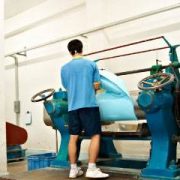
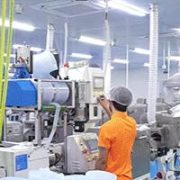
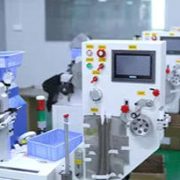
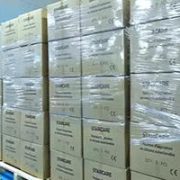
Our NBR Tube Production Process
Once place the orders, we will manufactured the rubber tube base on the standard production process





Related Products
"Take The Efficient Booster For Your Business Now "

Alan Chen
Product Sales Manager & Rubber Specialist at RISEUP
